

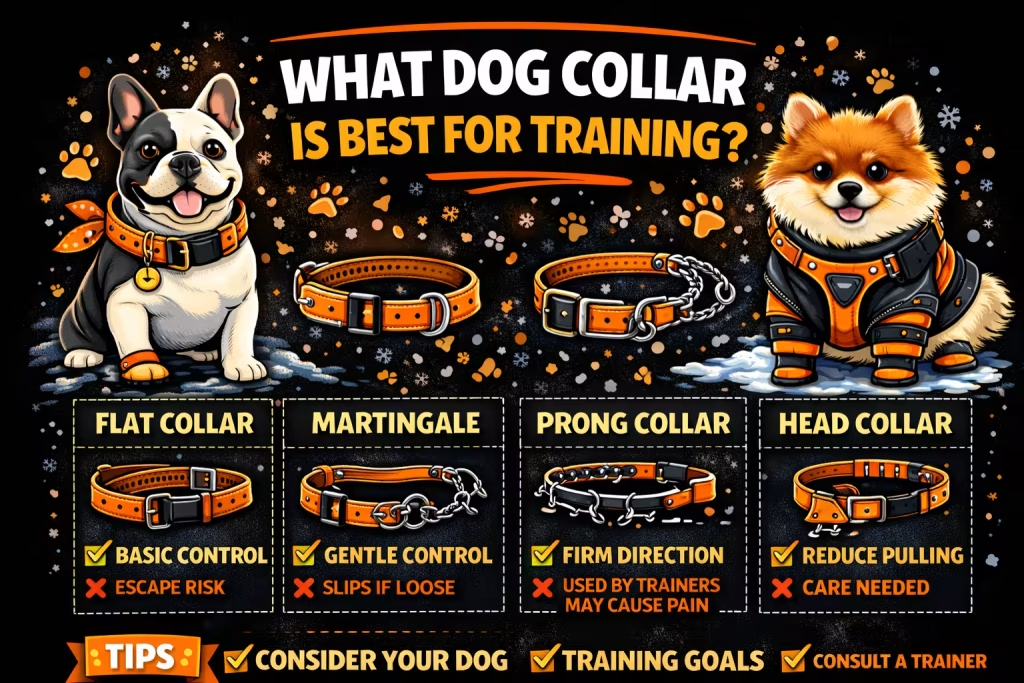
What Dog Collar is Best for Training?
As a dog owner, choosing the right training collar for your dog is essential. The variety of collars available today can be overwhelming, and each one has its unique purpose. Whether you’re working with a puppy who’s just starting, a small dog with lots of energy, or a large, strong dog who needs more advanced training, the right collar can make all the difference. It’s about more than just behavior correction; it’s about finding a tool that supports your dog’s training while keeping them safe and comfortable.
We will tell you the different types of training collars, their key features, and how to use them effectively, so you can make an informed decision about what will work best for your dog. We’ll explore which collars are the most suitable for specific breeds, sizes, and training goals, ensuring that your dog’s training journey is as successful as possible.
What Is a Dog Training Collar and Why Does It Matter?
A dog training collar is a tool used to help train dogs, correct undesirable behaviors, and reinforce positive actions. It’s essential for dog owners, especially those working with stubborn, hyperactive, or untrained dogs. Training collars come in various styles and offer different features, including sound, vibration, or static correction, and are used for everything from basic leash training to stopping unwanted barking or digging.
The right collar allows you to manage your dog’s behavior effectively and humanely. Using a collar that’s too harsh or doesn’t match your dog’s needs can lead to discomfort, fear, or confusion, hindering training progress. On the other hand, the best training collar will help guide your dog’s behavior, reinforce good habits, and speed up the learning process.
Understanding which collar works best for your dog’s temperament, breed, and size is key to achieving the best results. This guide will explore the top options available and provide advice on how to choose the most appropriate collar for your dog’s specific training needs. Before selecting a specific training tool, it is important to understand the fundamental differences in choosing between a dog harness vs. a collar to ensure you aren’t inadvertently encouraging pulling behavior
Why the Right Collar Makes All the Difference
Choosing the right training collar doesn’t just affect how well your dog behaves, it impacts their comfort and trust. A well-fitted, appropriate collar ensures that your dog can focus on learning without being distracted by discomfort. Moreover, using the correct collar improves the bond between you and your dog. It enables you to communicate more effectively with your pet, whether you’re teaching basic commands or working through more advanced training techniques.
For example, puppies require gentler collars that focus on positive reinforcement, while older dogs or strong breeds may need more robust collars to manage behaviors like pulling or excessive barking. Understanding your dog’s behavior and selecting the right training collar can ensure that your dog learns in a stress-free, comfortable environment.


Different Types of Dog Training Collars and Their Uses
Training collars come in many styles, each with a specific purpose. Here’s an overview of the most common types of dog training collars, helping you choose the best fit for your dog. Whether you need a high-traction flat collar or a specialized martingale, Supreme Dog Garage offers a curated selection of professional dog collars for training designed for durability and style.
Martingale Collars (Gentle and Effective)
Martingale collars are designed to provide gentle correction and control, making them perfect for dogs that pull or slip out of regular collars. These collars tighten slightly when the dog pulls, offering a mild correction without choking. Martingale collars are ideal for dogs with smaller heads or necks that may escape standard collars. They provide both safety and control, without causing discomfort, making them popular among dog owners in the United States, especially for training and everyday walks. While a martingale provides the physical control needed, pairing it with a proven strategy for how to train a dog that pulls on the leash will yield much faster results.
- Best For: Dogs that pull, puppies, and dogs with narrow heads.
- Key Features: Adjustable, mild correction, comfortable fit.
Slip Collars and Leads (Direct Control)
Slip collars, also known as choke chains, offer immediate correction by tightening when the dog pulls. They’re typically used for behavior modification and help teach leash manners. While effective, they require proper knowledge to avoid misuse. These collars should only be used with experienced handlers who understand how to use them correctly and safely.
- Best For: Experienced trainers, large dogs with strong pulls.
- Key Features: Immediate correction, effective for stubborn behaviors.
Adjustable Dog Training Collars (Grows with Your Dog)
Adjustable dog training collars are versatile and can grow with your dog, making them a great investment for puppies or dogs in transition. These collars are designed to be resized as your dog grows, ensuring that they remain comfortable and effective for training over time. They are typically made from durable materials like nylon or leather, offering both flexibility and long-term use.
- Best For: Puppies, growing dogs, long-term training.
- Key Features: Adjustable, long-lasting, comfortable.
Puppy Training Collars (Soft, Safe, and Easy to Use)
Puppy training collars are designed for young dogs that are just starting to learn basic commands. These collars focus on gentle methods like vibration or sound, which help your puppy associate the collar with positive reinforcement rather than fear. Puppy collars are lightweight and come in adjustable sizes to ensure comfort during use. They provide an excellent way to begin training without causing any harm.
- Best For: Puppies, beginner training.
- Key Features: Gentle vibration, sound cues, lightweight design.
Small Dog Training Collars (Lightweight and Durable)
Small dog training collars are lightweight but still durable enough for training purposes. These collars are specifically designed for small breeds, such as Chihuahuas or Yorkies, which require gentler, more refined training methods. Small dog training collars typically feature adjustable settings to ensure comfort without over-correcting. These collars can be used for basic training, including leash control and behavior correction.
- Best For: Small breeds, light pullers, gentle training methods.
- Key Features: Lightweight, adjustable, gentle correction.
Correction Collars (More Intensive Training)
Correction collars, also known as electronic collars or shock collars, offer more intensive correction, typically through static stimulation. These collars are effective for dogs that require a stronger approach, such as those with severe behavioral issues. The stimulation levels are adjustable, allowing you to customize the correction based on your dog’s sensitivity. However, these collars should be used with caution, and it’s important to follow proper training protocols to avoid misuse.
- Best For: Dogs with behavioral problems, experienced trainers.
- Key Features: Adjustable stimulation levels, effective for stubborn behaviors.
Key Features to Look for in the Best Dog Training Collar
The right dog training collar does more than simply correct behavior; it offers comfort, reliability, and safety. Here are the key features to look for when selecting a collar:
Adjustable Size and Comfort
A training collar should fit your dog comfortably without causing any restriction. Adjustable collars are ideal, as they allow you to tailor the fit to your dog’s size, whether you have a growing puppy or a large breed. Comfort is important because an uncomfortable collar can distract your dog during training, reducing its effectiveness. Ensure the collar fits snugly but isn’t too tight. Look for padded or soft collars for added comfort.
Durable Materials
Collars made from durable materials, such as nylon, leather, or neoprene, are built to withstand regular use. Nylon is lightweight and affordable, making it a good choice for puppies and lighter training sessions. Leather, on the other hand, is more durable and stylish, often used for adult dogs. Neoprene collars are waterproof and easy to clean, making them perfect for dogs that enjoy outdoor activities. Choose the material that fits your dog’s activity level and training needs. Leather is durable, while nylon is flexible and affordable.
Waterproof and Weather-Resistant Features
Waterproof collars are essential if your dog enjoys swimming or outdoor adventures. Whether you’re training in rainy weather or your dog loves water activities, a waterproof collar will maintain its functionality. For active dogs or dogs that train outside in various weather conditions, a waterproof collar is a must.
Personalization Options
Personalized collars not only add a unique touch to your dog’s gear but also enhance safety. Many collars come with options for name tags or reflective materials, which can help you spot your dog in low-light conditions. Reflective materials are particularly useful for evening walks or nighttime training sessions. Opt for reflective materials for visibility at night and consider adding an ID tag for safety.
-
Louis Pawtton Hero Brown Checkered Designer Leather Dog Harness and Leash Set
$35.00 – $94.50Price range: $35.00 through $94.50 -
Pawcci Designer Dog Harness And Leash Set
$59.50Original price was: $59.50.$39.00Current price is: $39.00.Rated 5.00 out of 5 -
Furry Berry Plaid Bow Tie Dog Collar And Leash
$20.00 – $35.00Price range: $20.00 through $35.00 -
Furdi FF Monogram Designer Dog Harness And Leash
$26.00 – $57.50Price range: $26.00 through $57.50Rated 5.00 out of 5


The Best Dog Training Collars for Different Dog Breeds and Sizes
Not all dogs are the same, and neither should their training collars be. Some dogs need more intense correction, while others require gentler methods. Let’s look at some of the best dog training collars for different breeds and sizes to ensure you choose the right tool for your pet’s needs.
Best Overall Training Collar
The Garmin Alpha 300i with TT 25 Collar stands out as one of the best overall training collars. Known for its 9-mile range, GPS tracking, and multi-dog support, this collar is ideal for those who need a versatile tool for both training and tracking. It’s equipped with 20 stimulation levels, which means you can adjust the intensity based on your dog’s response. This collar is perfect for a wide range of breeds and is built to withstand various outdoor conditions.
- Key Features: Long-range, GPS tracking, multi-dog support, adjustable stimulation levels.
- Best For: Large breeds, active dogs, and outdoor training.
Best Collar for Beginners
For new dog owners or those just starting out with training, the Garmin Pro 550 Plus is an excellent choice. This collar offers 18 stimulation levels and a 2+ mile range, making it simple to use while still providing effective training. It’s designed with ease of use in mind, featuring a simple compass display and point alert for easy location tracking.
- Key Features: Easy-to-use, adjustable stimulation, long-range.
- Best For: Beginners, general obedience training.
Best Collar for Retrievers and Sporting Dogs
If you’re training a retriever or any sporting dog, the SportDog WetlandHunter 425X collar is a fantastic option. With a 500-yard range and 21 stimulation levels, this collar is tailored for outdoor use, particularly in wetland or waterfowl hunting environments. It’s waterproof and has a long battery life, ensuring reliable performance during long training sessions.
- Key Features: Waterproof, adjustable stimulation, long battery life.
- Best For: Retrievers, hunting dogs, water-based training.
Best Budget Training Collar
For those on a budget, the DT Systems DD700 offers reliable performance at a lower price point. This collar provides 700-yard range and 10 stimulation levels, making it effective for everyday training needs. It’s waterproof and easy to use, providing solid features without the high price tag.
- Key Features: Affordable, waterproof, basic functionality.
- Best For: Budget-conscious owners, basic obedience training.
Top Dog Collars for Specific Training Goals
Best Bark Collar (For Reducing Excessive Barking)
If barking is a problem, consider the SportDog NoBark SBC-10. This collar uses progressive correction to gradually reduce barking, and it’s waterproof for use in all weather conditions. It’s a safe and humane solution for managing excessive barking without causing harm.
- Key Features: Progressive correction, waterproof, no vibration.
- Best For: Dogs with excessive barking, nighttime training.
Best Invisible Fence Collar
For pet owners looking to establish an invisible boundary for their dogs, the PetSafe Stay and Play Wireless Fence is a top choice. The collar works by sending a signal to the dog when they approach the boundary. It’s a portable solution, perfect for homes with large yards or those who want to avoid traditional fences.
- Key Features: Wireless, portable, correction-free re-entry.
- Best For: Dogs that need a boundary without a physical fence.
Best Remote Training Collar
If you need a remote control for training, the Garmin Alpha LTE is an excellent choice. This collar provides unlimited range via a smartphone app, allowing you to track your dog’s location and provide corrections from anywhere. It’s perfect for those who want the flexibility of remote training.
- Key Features: Unlimited range, smartphone app, tracking-only feature.
- Best For: Long-range training, tracking, outdoor activities.
How to Use Dog Training Collars Effectively
Using a dog training collar effectively requires not only the right equipment but also a strategic approach. Simply putting a collar on your dog won’t solve all behavior problems. Consistency, patience, and the correct application of the collar’s features are essential to successful training.
Positive Reinforcement + Correction
A successful training collar should complement positive reinforcement methods. Positive reinforcement encourages good behavior by rewarding your dog with treats, praise, or toys. This method helps your dog understand that they are being rewarded for correct actions. When combined with a gentle correction, such as vibration or sound, it creates a balanced and effective approach.
For example, when your dog follows a command or stops an undesirable behavior, reward them immediately with a treat. If they don’t respond to the command, a mild correction via the collar can remind them of the expectation. The key is to ensure that corrections are never too harsh but firm enough to get your dog’s attention.
Consistency and Timing Are Key
Consistency is the foundation of any training program. Your dog needs to understand that certain behaviors are always met with the same response. A dog training collar is a powerful tool, but it requires consistent use. Whether you’re teaching your dog to stop pulling on the leash or respond to commands, you must apply corrections immediately after the behavior occurs.
For instance, if your dog pulls on the leash during a walk, a correction must happen right at the moment of pulling, not after your walk is over. This helps your dog connect their behavior with the correction and reward.
Gradual Introduction to the Collar
When introducing a dog training collar to your dog, it’s important to take it slow. Start with the lowest setting and allow your dog to get used to wearing the collar before any corrections are made. This process helps avoid overwhelming your dog with the sensation of correction and creates a positive association with the collar.
Introduce the collar for short periods initially, and don’t apply any corrections immediately. Once your dog is comfortable wearing the collar, begin using it during training sessions, gradually increasing the level of stimulation as necessary.
Tailoring to Your Dog’s Personality
Each dog has a unique personality, and their training needs will differ accordingly. Some dogs respond well to verbal commands and light corrections, while others may require more intense training tools. You may need to adjust your approach based on your dog’s temperament. For example, a highly energetic dog like a Border Collie may need firmer, consistent corrections to focus during training, while a shy dog may respond better to softer cues.
The training collar should be used to complement your dog’s natural behavior and help guide them toward the desired outcome. It’s crucial to consider their level of sensitivity to corrections and use the appropriate collar setting for each individual dog.
Building Trust and Respect
Using a training collar isn’t about punishment, it’s about building a trusting relationship with your dog. Your dog should not associate the collar with fear or pain, but rather with learning and growth. It’s important to build trust by consistently rewarding good behavior and avoiding overuse of the correction feature.
By using a collar as part of a positive training plan, you are reinforcing the idea that training is a way to help your dog succeed and be a well-behaved member of the family. Establishing a respectful relationship where your dog sees the training collar as a helpful tool will ensure long-term success.
Frequently Asked Questions About Dog Training Collars
What to Look for When Choosing a Dog Training Collar?
Key factors include adjustable stimulation levels (tone, vibration, static), comfortable fit with padding, waterproofing for outdoor use, long range (500+ yards), and durable materials like nylon or leather. These ensure a safe, effective fit for your dog’s needs.
Can Training Collars Be Used on Any Breed?
Yes, but match to breed, size, and temperament: lighter vibration/tone for small/sensitive dogs; stronger static for large/stubborn breeds. Always pair with positive reinforcement and start low.
Are Training Collars Safe for My Dog?
Yes, when used properly per instructions, start at the lowest level in a structured program. They’re humane tools for guidance, not punishment, and safe for mature dogs.
When Should I Start Using a Dog Training Collar on My Puppy?
Wait until 6+ months and after socialization. Use gentle, positive-reinforcement collars first to avoid stress; introduce corrections later as behavior stabilizes.
How Do Dog Training Collars Work?
They deliver stimuli (vibration for attention, tone for cues, mild static for correction) to link unwanted behavior with discomfort, helping dogs learn to avoid it. Combine with other methods for best results.
What Are the Advantages of Remote Training Collars?
- Off-leash freedom with distant corrections.
- Wide range (up to miles) for large areas.
- Adjustable levels for customization.
- Better control in distractions like parks.
Conclusion – Finding the Right Collar for Your Dog’s Training Needs
Choosing the best dog collar for training is an important decision that directly impacts your dog’s learning process. Whether you’re training a puppy, a small dog, or an adult dog with behavior problems, the right collar can make all the difference in ensuring a successful, humane training experience.
By considering factors like breed, size, temperament, and training goals, you can find a collar that not only suits your dog’s needs but also supports the growth of a strong, positive relationship between you and your pet.
Remember that training collars should be used as part of a broader training strategy that includes positive reinforcement and consistent practice. If you are unsure which collar is right for your dog, consult with a professional trainer who can help guide your decision.
As you move forward with training, investing in high-quality, comfortable, and effective training collars is key to achieving the results you want. Visit Supreme Dog Garage for a wide selection of dog training gear and collars designed to fit every dog’s needs and help you succeed in your training journey.

Top Dog Walking Products for Every Adventure
Make every walk an experience with premium dog walking gear from Supreme Dog Garage. Whether you’re exploring the neighborhood or hitting the trails, our curated selection of leashes, harnesses, collars, and accessories combines style, comfort, and durability, perfect for every pup and their person.
