

How to Leash Train a Dog That Pulls: Step-by-Step Guide
Walking your dog should be a fun and relaxing part of the day, but for many pet owners, it can quickly become stressful when their dog constantly pulls on the leash. A pulling dog doesn’t just make walks unpleasant; it can be unsafe for both the dog and the owner. Dogs that drag their owners may risk injury to their neck, spine, or joints, while owners can experience arm strain, falls, or frustration that leads to less frequent walks.
The good news is that with the right approach, consistency, and proper gear, you can train your dog to walk politely on a leash. In this guide, we’ll break down why leash training is important, why dogs pull, and how you can lay the foundation for calm, enjoyable walks with proven methods and recommended tools.
Why Dogs Pull on the Leash
Leash pulling is a common issue among dogs, and it usually occurs when a dog is too excited, doesn’t know the proper walking behavior, or has not been trained to stay by your side. Dogs may also pull out of frustration or to reach something that catches their attention. This is a natural behavior, but it can be corrected with patience and the right training methods.
Several reasons contribute to leash pulling:
- Excitement: Many dogs pull because they are eager to get to their destination or explore their surroundings.
- Lack of Training: Without proper guidance, dogs will often assume pulling is a way to get where they want to go.
- Rewarding Pulling Behavior: If your dog pulls and is rewarded with forward movement, they’ll repeat the behavior.
- Opposition Reflex: This is a natural reflex that causes a dog to pull against pressure on the leash.
Understanding why dogs pull on leashes can help you address the root cause and find effective solutions. The key to success is teaching your dog that walking calmly without pulling is what leads to rewards, not pulling ahead.
Why Leash Training is Important for Every Dog
Leash training goes beyond simple obedience. It ensures your dog’s safety and strengthens your bond during walks. A well-trained dog is less likely to dart into traffic, chase after another dog, or injure themselves while tugging. Proper leash manners also make walks more enjoyable, which encourages owners to walk their dogs more often, a key factor in maintaining a healthy lifestyle for both the pet and the human.
From a behavioral perspective, leash training helps dogs learn self-control. Instead of dragging you from one spot to another, they begin to understand that calm walking leads to rewards. This prevents frustration for both of you and reduces the risk of leash reactivity, where a dog barks or lunges at other dogs during walks.
For growing puppies, leash training is a foundation for all future training. For larger breeds, especially strong pullers, it is essential for safety. Even small breeds can benefit, as leash pulling increases stress on their delicate necks. By teaching your dog proper leash behavior, you make walks safer, calmer, and more rewarding for everyone involved.
Essential Gear for Leash Training a Dog That Pulls
Before you begin leash training, it’s important to have the right equipment. The proper gear ensures that your dog is comfortable and that you can safely and effectively guide them during training sessions.
1. Leash Selection: 6-Foot Leash vs. Retractable Leashes
A 6-foot leash is the ideal length for training because it provides enough control over your dog without being overly restrictive. Retractable leashes, while convenient, can be counterproductive during training because they don’t allow you to maintain consistent control and may encourage your dog to pull. Stick to a standard 6-foot leash to maintain focus during training and avoid distractions.
2. Choosing the Right Harness or Collar
The right harness or collar is crucial in training your dog to stop pulling.
- Front-Clip Harness: This type of harness has a clip at the front that helps redirect your dog’s attention back to you when they pull forward. It’s especially effective for preventing pulling and is great for dogs who tend to drag you during walks.
- Head Halters: A head halter works like a leash for a horse, allowing you to control your dog’s head. This is an excellent tool for reactive dogs or those that are hard to control, as it gives you better steering control and reduces pulling.
- No-Pull Harnesses: These harnesses apply pressure to the dog’s chest or shoulders when the dog pulls, discouraging the behavior.
3. Treat Pouch and Clicker Training
Positive reinforcement is key to effective leash training. Carrying a treat pouch with high-value treats and using a clicker for marking good behavior will significantly improve your dog’s responsiveness. Clicker training creates a clear signal that reinforces desired behaviors, making training more effective and quicker.


Training Method or Step | Purpose of Method | Key Techniques | Recommended Gear | Common Challenges Addressed | Expected Outcome (Inferred) |
Introducing the Leash | To make the dog comfortable with wearing the leash and create a positive association without causing anxiety. | Attaching the leash indoors; allowing the dog to walk around with it; using treats and praise for reinforcement. | Standard dog collar or harness; dog leash. | Anxiety or discomfort related to the equipment. | The dog will remain calm and relaxed when the leash is attached and trailing. |
Loose Leash Walking Indoors | To teach the foundation of calm walking in a controlled environment without distractions. | Walking slowly; rewarding slack leash with treats; stopping immediately if the dog pulls. | Fixed-length leash; high-value treats; treat pouch. | Initial pulling behaviour; failure to stay by the owner’s side. | The dog understands that forward movement only happens when the leash is slack indoors. |
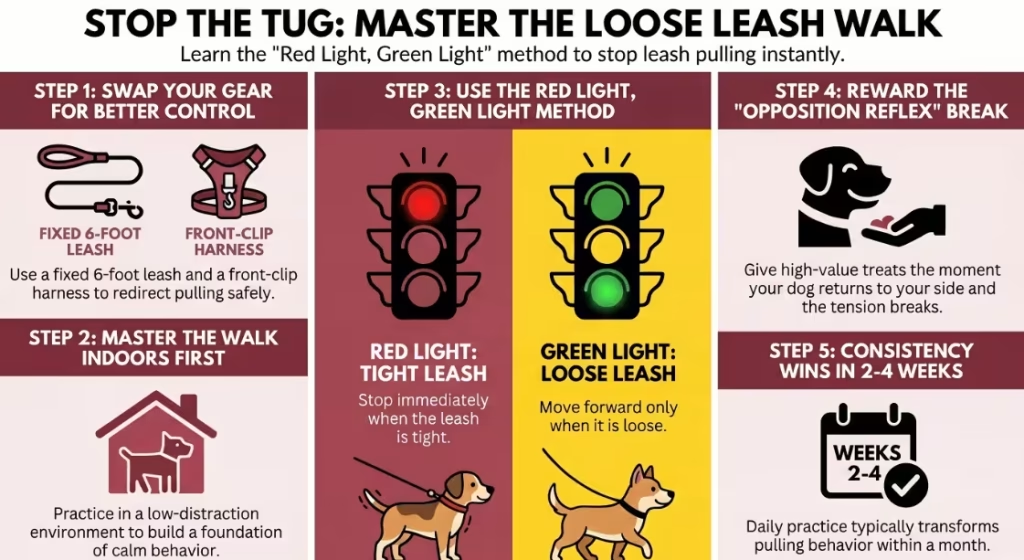
Stop-and-Go (Red-Light/Green-Light Training) | To teach the dog that a tight leash results in no progress while a loose leash allows movement. | Walk forward when leash is loose; stop immediately when leash is tight; wait for the dog to return to your side. | 6-foot leash; front-clip harness. | Opposition reflex (instinctive resistance to leash pressure). | The dog self-corrects by loosening the leash whenever they feel tension. |
Transitioning to Outdoors | To generalise the loose leash behaviour in real-world environments with increasing distractions. | Starting in low-distraction areas (backyard); stopping when pulling occurs; rewarding focus and calm behaviour. | 6-foot leash; no-pull harness or head halter; treat pouch. | Curiosity; environmental distractions; instinct to pull towards interesting smells. | The dog maintains a loose leash even when encountering minor outdoor stimuli. |
Addressing Over-Excitement | To lower the dog’s arousal levels before the walk begins to improve focus. | Engaging in calming exercises (sitting, staying) before leaving; reward impulse control. | Treat pouch with high-value treats; clicker. | Over-excitement; lunging; ignoring commands due to high arousal. | The dog starts the walk in a focused mental state rather than a hyperactive one. |
Desensitisation and Redirection | To manage reactivity and keep the dog’s focus on the owner rather than external triggers. | Gradually introducing distractions at a distance; ‘Look at That’ game; rewarding eye contact. | Head halter; front-clip harness; high-value treats. | Leash reactivity; barking or lunging at other dogs/people; lack of mental focus. | The dog chooses to look at the owner for guidance when seeing a trigger instead of reacting. |
Step-by-Step: How to Train Your Dog to Walk on a Loose Leash
Teaching your dog to walk on a loose leash takes time, patience, and consistency. At Supreme Dog Garage, we know how important it is for owners to enjoy stress-free walks with their dogs, which is why we recommend using the right dog harness and dog leashes from the start. Below is a proven step-by-step process to help your dog learn calm walking habits and reduce pulling.
Step 1: Introducing the Leash
The first step in leash training is to make your dog comfortable with wearing the leash. Start by gently attaching the leash to your dog’s collar or harness indoors. Allow them to walk around with it for short periods, ensuring that the leash doesn’t cause anxiety. Use treats and praise as positive reinforcement to create a positive association with the leash.
Step 2: Loose Leash Walking Indoors
Once your dog is comfortable wearing the leash, the next step is teaching them to walk on a loose leash indoors. Begin by walking slowly around the room, keeping the leash loose. When your dog stays beside you with the leash slack, reward them with praise and treats. If your dog pulls ahead, stop immediately. Wait for them to return to your side, and then continue walking. This reinforces the idea that pulling stops the walk, while walking calmly rewards them with progress.
Step 3: Transitioning to Outdoors
After successful indoor sessions, it’s time to move outdoors. Start in a low-distraction environment, such as your backyard or a quiet street. Gradually expose your dog to more distractions as they progress. If your dog begins to pull, immediately stop walking and wait for them to return to your side. Reinforce the calm behavior with treats and praise. The goal is to ensure your dog associates walking calmly with rewards and progress.
Step 4: Reward Calm Behavior
Dogs repeat behaviors that get rewarded. The moment your dog walks calmly by your side or keeps the leash slack, reward them with a treat or praise. This teaches them that staying close to you brings rewards, while pulling gets them nothing.
Consistency is key. Every time your dog demonstrates loose-leash walking, reinforce it. Over time, they will learn that calm behavior is the fastest way to continue the walk.
Step 5: Use Stop-and-Go or Red-Light/Green-Light Training
This method is one of the most effective ways to stop leash pulling. The idea is simple:
- When the leash is loose (green light) → Walk forward.
- When the leash is tight (red light) → Stop immediately.
Your dog quickly learns that pulling gets them nowhere. Instead, a slack leash allows them to continue exploring. Combine this with treats and praise when the leash is loose to reinforce the lesson.
-
Louis Pawtton Hero Brown Checkered Designer Leather Dog Harness and Leash Set
$35.00 – $94.50Price range: $35.00 through $94.50 -
Pawcci Designer Dog Harness And Leash Set
$59.50Original price was: $59.50.$39.00Current price is: $39.00.Rated 5.00 out of 5 -
Furry Berry Plaid Bow Tie Dog Collar And Leash
$20.00 – $35.00Price range: $20.00 through $35.00 -
Furdi FF Monogram Designer Dog Harness And Leash
$26.00 – $57.50Price range: $26.00 through $57.50Rated 5.00 out of 5


Troubleshooting Common Leash Training Problems
Handling Over-Excitement and Reactivity
Many dogs, especially those with a lot of energy or excitement, may struggle with staying calm on the leash. When your dog pulls, it’s often because they’re overly excited about going on a walk, exploring, or seeing other dogs or people. This excitement can cause them to ignore commands and pull ahead. The best way to address over-excitement is to teach your dog to calm down before the walk.
Before stepping out, take some time to help your dog relax. You can try sitting with your dog for a few minutes, engaging them in a calming exercise, or using obedience training exercises like “sit” and “stay” to give them focus. A calm dog is more likely to walk calmly. Additionally, teaching impulse control through short wait-or-stay sessions will help them learn that calm behavior is rewarded.
If you’re dealing with a reactive dog, which tends to pull or bark at passing distractions (other dogs, cars, people), desensitization is a useful technique. Gradually introduce these distractions at a distance and reward your dog for focusing on you. Over time, they’ll learn that paying attention to you, rather than reacting to the environment, leads to better rewards.
Leash Pressure and Opposition Reflex
A common problem many owners face when trying to stop their dog from pulling is understanding the opposition reflex. This reflex occurs when a dog pulls against leash pressure because they instinctively resist the feeling of the leash being taut. Dogs do this naturally and it becomes ingrained if not corrected early.
To break this reflex, you must teach your dog that pulling results in a stop. Each time your dog pulls, stop walking immediately and wait for them to return to you. Once the leash is slack, you can begin walking again, rewarding the relaxed behavior with treats. The key is to be consistent in your reactions to pulling, so your dog learns that tightening the leash leads to no movement, while a loose leash allows movement and progress.
Another useful technique is to use a front-clip harness or head halter. These tools gently steer the dog back toward you when they pull, helping break the habit of pulling and teaching them to walk without constant correction.
Distractions and Mental Focus
One of the toughest challenges in leash training is teaching your dog to walk calmly in distracting environments. Dogs are naturally curious and will often pull toward other dogs, people, or interesting smells. To address this, you must teach your dog how to stay engaged with you, even in the face of distractions.
Training in high-distraction environments can be conducted step by step. Start by walking your dog in a quiet area with fewer distractions, and gradually introduce new distractions as they improve. When a distraction arises, redirect your dog’s attention back to you by using treats or verbal cues. If your dog focuses on you rather than the distraction, reward them with a treat and praise.
One effective technique is the “Look at That” game. In this game, you allow your dog to look at a distraction (another dog or person, for example) and then immediately redirect their attention back to you. When they make eye contact with you, reward them. Over time, your dog will learn to pay more attention to you and less to distractions during walks.
It’s important to remember that this process takes time and consistency. Training your dog to stay focused in a world full of distractions will take patience, but with regular practice, your dog will gradually learn to walk calmly by your side.
Tips for Successful Leash Training
Leash training can be challenging, but small adjustments in your approach make a big difference. Here are some practical tips:
- Train in short, fun sessions – Dogs learn better in small bursts than in long, exhausting walks.
- Stay calm and patient – Yelling or jerking the leash creates stress and slows progress.
- Be consistent with rules – Don’t allow pulling sometimes, and stop it other times.
- Make walks engaging – Vary your pace, use toys, or practice commands along the way to keep your dog interested.
At Supreme Dog Garage, we’ve seen how the right gear combined with consistent training transforms walks. With our no-pull harnesses and durable leashes, leash training becomes smoother, safer, and more enjoyable for both you and your furry friend.
Recommended Products to Make Leash Training Easier
The right equipment can make all the difference in successful leash training. At Supreme Dog Garage, we’ve selected products designed to give owners better control while keeping dogs comfortable and safe. Our no-pull dog harnesses help reduce pulling by distributing pressure evenly across the chest. Pairing this with one of our durable dog leashes ensures you have a strong grip and reliable control on every walk.
For added safety, our dog collars with ID tags help keep your pet identifiable if they wander. We also offer stylish and practical walking accessories, including crossbody bags for treats, backpacks, and even sunglasses for your pup. Combining these tools with proper training methods not only makes walks easier but also elevates the overall walking experience for both you and your dog.
Frequently Asked Questions
How long does it take to leash-train a dog?
The timeline varies, but with daily practice, many dogs improve within two to four weeks. Strong pullers or rescues may require more time.
Should I use a retractable leash?
Retractable leashes encourage pulling and offer less control. A fixed-length leash is much safer and more effective for training.
What’s the best harness for a pulling dog?
A front-clip no-pull harness is usually best, as it redirects pulling and gives you better control without causing strain on the dog’s neck.
How do I stop leash reactivity?
Focus on distance, redirection, and rewarding calm behavior. Gradually desensitize your dog to triggers while keeping their focus on you.
Final Thoughts: Turning Walks Into a Fun Experience
Leash training takes time, patience, and consistency, but with the right approach, your dog can learn to walk calmly by your side. By starting with the basics, using the right equipment, and addressing distractions and excitement, you can transform your dog’s pulling behavior into relaxed, enjoyable walks. Remember to use positive reinforcement, short sessions, and consistent practice to maintain progress.
Don’t be discouraged by setbacks; with dedication and effort, you and your dog will soon enjoy peaceful walks together. If you’re looking for additional support, our training tools and dog accessories at Supreme Dog Garage can help make your walks more comfortable and stylish. Whether you need a no-pull harness, front-clip harness, or a high-quality leash, we have everything you need to make your dog’s leash training journey a success.

Top Dog Walking Products for Every Adventure
Make every walk an experience with premium dog walking gear from Supreme Dog Garage. Whether you’re exploring the neighborhood or hitting the trails, our curated selection of leashes, harnesses, collars, and accessories combines style, comfort, and durability, perfect for every pup and their person.
