

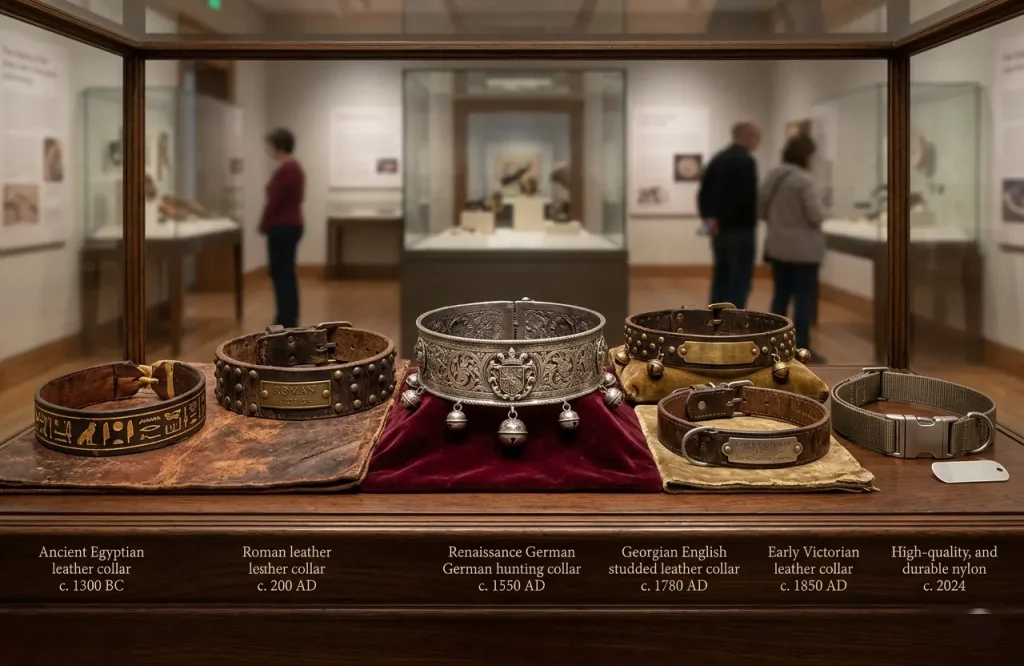
The History of Dog Collars: From Ancient Times to Modern Styles
Reviewed and Updated: June 24, 2026
Dogs have been companions to humans for thousands of years, helping with hunting, protection, and companionship. One of the most enduring links between humans and dogs is the collar. From its earliest forms as a simple rope to modern smart collars, it reflects a rich history of function, culture, and fashion. Understanding the evolution of dog collars provides insight into how societies valued dogs, the materials available to them, and the cultural symbolism attached to these animals. For pet owners in the United States today, knowing this history can help make informed decisions when choosing collars that combine style, comfort, and safety. At Supreme Dog Garage, we offer a wide range of collars that honor both tradition and modern innovation, ensuring pets are safe, stylish, and comfortable.
Origins of Dog Collars in Antiquity (Before 1000 BCE)
Earliest Evidence of Collared Dogs
The earliest evidence of dogs wearing collars comes from rock art sites in Shuwaymis and Jubbah, Saudi Arabia, dating back approximately 8,000 years. These depictions show dogs leashed or collared, suggesting that humans recognized the need to control, protect, and manage their canine companions even in prehistoric times. Early collars were likely simple cords or rawhide strips used to restrain hunting dogs or guard animals. This basic functional purpose set the stage for the collar’s evolution as a cultural and social symbol.
Mesopotamia: The First Functional Collars
The Sumerians and Mesopotamians developed some of the first documented collars. Archaeological sites such as Sippar reveal evidence of early leather collars used to control dogs and denote ownership. Dogs were often associated with deities, including Gula, the goddess of healing, and Inanna/Ishtar, linked to love and war. Collars were not only practical but also carried symbolic meaning, indicating a dog’s sacred role or its importance within the household. By 612 BCE, collars had evolved from simple cords to snug-fitting bands and slip-leads for upper-class dogs, blending utility with emerging social status markers.
Ancient Egypt: Artistic and Symbolic Collars
In Ancient Egypt, collars transitioned from practicality to artistry. Initially made from rope, collars later incorporated leather, copper, and bronze studs, often engraved with the dog’s name. Dogs in Egypt, particularly breeds like Greyhounds and Mastiffs, were highly valued and often connected to the jackal-god Anubis, a deity representing protection in the afterlife. Archaeological finds from Maiherpri’s tomb show collars decorated with lotus motifs and inscriptions, highlighting both ownership and spiritual significance. These collars symbolized the dog’s elevated status and reflected the cultural belief that dogs acted as spiritual guardians.
Persia and Western Asia: Status and Function
In Persia, collars clearly marked social hierarchy. Upper-class dogs wore ornate collars made of gold and fine linen, while working or lower-class dogs had leather or simple cloth collars. Dogs played roles in protection, hunting, and herding, and the style and material of their collars directly reflected their owners’ social standing. Collars also had ceremonial importance, often appearing in artwork and tomb inscriptions. These historical practices reveal that even ancient societies used collars to convey both function and prestige.
Mesoamerica: Symbolism and Spiritual Protection
In Mesoamerican civilizations such as the Maya, Aztecs, and Tarascans, dogs were often seen as spiritual guides, bridging the human world and the afterlife. Collars were used to differentiate social status and spiritual roles. Noble dogs were adorned with elaborate collars, while working dogs had simpler bands. Collars were sometimes decorated with bells or symbolic charms to guide spirits, reflecting a cultural belief that dogs had protective and ceremonial functions beyond their physical tasks.
China and Japan: Spiritual Guardians
In China and Japan, collars were not just practical tools but also spiritual safeguards. Dogs were considered protectors, and collars often included charms, bells, and amulets designed to ward off evil spirits or ghosts. This tradition demonstrates the cultural integration of pets into the spiritual life of a community, with collars serving as more than functional equipment—they were symbols of guardianship and respect for the dog’s role in human society.
Classical Antiquity (1000 BCE – 500 CE)
Greece: Innovation and Protection
In ancient Greece, dog collars became more than simple tools. Collars were designed to protect dogs from predators and to control them during hunting or guard duties. To combat predators, the Greeks invented the Wolf Collar (or classic spiked stud collar). These were heavy leather bands closely fitted with protruding iron spikes. Because wolves and wild dogs instinctively hunt by biting the throat, these protection collars effectively neutralized attacks on livestock-guarding breeds, acting as a crucial piece of ancient canine armor. Artistic depictions on pottery and reliefs show collars adorned with intricate designs, reflecting a balance between utility and aesthetic value. Greek mythology, including tales of Cerberus, influenced collar symbolism, emphasizing the connection between dogs and protection in both the physical and spiritual sense. Collars in Greece often indicated a dog’s role and the status of its owner, foreshadowing the symbolic significance that would expand in later civilizations.
Rome: Diverse Designs and Practical Roles
The Romans inherited and expanded upon Greek and Etruscan collar designs. This design evolution is famously preserved in ancient Etruscan tomb wall paintings, which showcase the earliest transitions from crude ropes to thick, structured leather bands. Dogs served multiple roles, from Molossians guarding properties to racing hounds and military dogs. Collars ranged from simple leather bands for working dogs to iron-spiked collars for protection during war or guarding. Upper-class Roman pets often wore decorative collars that displayed ownership, status, or affiliation with their master. Notable examples from Pompeii and Roman writings indicate that collars were sometimes marked with inscriptions or embellishments to identify dogs, serving both functional and ceremonial purposes. Leather, combined with metalwork, became a hallmark of Roman craftsmanship in dog collars.
Non-European Civilizations (500 BCE – 1500 CE)
Persia: Prestige and Ornamentation
In Persia, collars reflected social hierarchy and the importance of dogs within elite circles. Dogs owned by nobility often wore collars made of gold, fine linen, or decorated metals, while common or working dogs were fitted with leather collars. These collars were not just functional; they indicated social rank, hunting privileges, and ceremonial significance. Persian art and bas-reliefs depict dogs with collars, highlighting their roles in both daily life and ritual practices, demonstrating the dual function of collars as tools and symbols.
Mesoamerica: Spiritual Significance
Civilizations like the Maya, Aztecs, and Tarascans considered dogs to be guides and protectors, connecting the human world with spiritual realms. Collars in Mesoamerica were often elaborate for noble dogs, featuring ornamental designs and charms. Dogs could serve as guardians, hunting companions, or spiritual intermediaries, and their collars reflected these roles. The variation in collar design, from simple bands to decorated necklaces, clearly indicated the dog’s function and social importance within the community.
China and Japan: Collars as Protective Symbols
In China and Japan, collars often included bells, charms, and decorative elements to ward off evil spirits. Dogs were regarded as spiritual guardians, and their collars were imbued with protective meaning. Some collars were made from luxurious textiles or reinforced leather to show care for prized dogs, while others served practical purposes, such as identification or control. These early practices highlight a cultural understanding of dogs as protectors, combining utility with symbolism.
Medieval and Renaissance Europe (500 – 1800 CE)
Medieval Europe: Utility and Status
During the Middle Ages, dog collars emphasized both function and social standing. Heavy spiked leather collars protected large dogs from wolves or other predators during hunting. Collars also indicated the dog’s role: hunting, guarding estates, or serving as messenger animals. Nobility often outfitted their dogs with embroidered, velvet, or gem-adorned collars, signaling prestige. Collars became a clear reflection of a dog’s occupation and the owner’s wealth, making them both practical and symbolic. This operational hierarchy is famously immortalized in the 11th-century Bayeux Tapestry, where King Harold Godwinson’s hunting party is depicted alongside finely collared tracking hounds. These artistic records show that medieval collars were meticulously tailored to a dog’s specific occupation—slender, flexible bands for agile coursing hounds, and massive, iron-reinforced protection guards for combat mastiffs.
Renaissance Europe: Ornamentation and Personalization
During the Renaissance, collars evolved into more refined and decorative pieces. Upper-class pets wore collars made from leather, fabric, or metal, often with engraved details or ornamental patterns. These collars demonstrated wealth and care for dogs as companions rather than solely for work. Artists of the period frequently depicted dogs wearing collars in portraits and tapestries, signaling their status alongside their owners. The shift from utility to ornamentation marked the early stages of dog collars as fashion statements, setting the stage for developments in the Victorian era.
The 18th Century: Collars as Legal Proof and Licensing
As Europe transitioned out of the Renaissance, dog collars took on a vital legal function. During the 1700s, urban areas began implementing strict ownership laws and dog taxes to control stray populations. Collars quickly shifted from luxury status symbols to legal necessities. A brass or silver collar stamped with the owner’s name and address served as official proof that the capital tax had been paid. Without this visible collar, free-roaming dogs were often treated as strays and legally culled by local authorities.
Cultural Influences and Broader Adoption
Across Europe, collars reflected not only function but also cultural values and social structure. Dogs associated with royalty or nobility, such as those owned by Queen Victoria, wore personalized collars that included names or insignia, emphasizing the dog’s identity and its bond with humans. Even practical working dogs in rural areas were fitted with collars suited to their roles, whether herding, guarding, or assisting in hunting. Collars thus became a medium to express both social hierarchy and affection, bridging practicality with symbolic meaning.
Key Insights from Ancient to Medieval Collars
- Function and Status: Collars were tools for control, protection, and social distinction.
- Material Evolution: Early cords → leather → metal embellishments → embroidered fabrics.
- Symbolism: Collars often represented the dog’s role, the owner’s wealth, or spiritual protection.
- Artistic Depictions: Archaeological sites like Maiherpri’s tomb, artworks, and tapestries provide valuable historical evidence.
Victorian Era to Early 20th Century (1800–1950s)
Industrialization and Mass Production
During the Victorian Era, dog collars underwent a significant transformation. Industrialization allowed for mass production of leather and metal collars, making them accessible beyond the elite. Collars now featured engraved nameplates, standardized buckles, and decorative elements. This period marked the beginning of personalization as a standard practice. Dogs were increasingly seen as family companions rather than solely working animals, which influenced the design and symbolism of collars. Historical figures like Queen Victoria helped popularize the idea of personalized and ornate collars, demonstrating a cultural shift toward companionship and status.
Luxury and Fashion Collars
Upper-class pets in Europe and the United States often wore collars made of leather, silk, or adorned with metal studs and gems, signaling prestige and taste. These collars were not just functional; they served as fashion statements and status symbols. Over time, this trend spread to broader society, with dog collars reflecting owner personality, social status, and cultural influences. The rise of urban pet ownership in the 19th and early 20th centuries encouraged more decorative and comfortable collars, blending style with practicality.
Modern Styles and Functional Evolution (1950s–Present)
Everyday Collars
By the mid-20th century, collars became a standard accessory for dogs across the United States. Flat leather collars, nylon webbing collars, and simple buckle systems dominated the market. These collars focused on durability, comfort, and identification. The widespread adoption of collars coincided with the increase in dog ownership, as noted by organizations like the American Veterinary Medical Association (AVMA) and the American Pet Products Association (APPA), which report millions of U.S. households owning dogs.
Specialized and Training Collars
Modern collars are not only for everyday wear but also for training and safety. Examples include:
- Martingale collars: Prevent dogs from slipping out during walks, commonly used for Greyhounds and Italian Greyhounds.
- Prong collars: Used for large or strong breeds for controlled training sessions.
- Head halters: Guide dogs gently without causing pain.
These collars demonstrate the evolution from simple restraint to targeted functionality, accommodating both behavior training and safety requirements.
Smart and Tech-Enabled Collars
The 21st century introduced smart collars integrating technology such as:
- GPS tracking for locating pets.
- Activity monitoring to track health and fitness.
- Health sensors and alerts for unusual behavior.
Modern pet insurance providers like Rainwalk Pet Insurance and the Insurance Information Institute recognize the value of these collars in preventing loss and health issues, emphasizing their practical benefit in addition to style.
Luxury and Designer Collars
Today, collars have become fashion and lifestyle items. Brands such as Slade Czech create handcrafted leather collars that combine durability with aesthetic storytelling. Some collars feature:
- Custom engraving.
- Designer embellishments.
- Materials like high-quality leather, metals, or reflective fabrics for safety.
Luxury collars appeal to pet owners who value both tradition and style, continuing the historical link between collars and social signaling.
Materials and Craftsmanship
The materials used in dog collars reflect centuries of evolution:
Era | Materials | Purpose / Notes |
Ancient | Rope, twine, leather | Control and protection |
Classical | Leather, metal | Durability, symbolic status |
Medieval | Leather, metal, embroidered fabric | Protection, social rank |
Victorian | Leather, metal, silk, brass | Personalization, fashion |
Modern | Leather, nylon, synthetics, LED | Comfort, identification, tech-enabled |
Leather remains a primary material due to its durability, comfort, and adaptability, a choice preserved from Roman innovations through to contemporary handcrafted collars.
Why Collars Still Matter Today
Dog collars today continue to combine practicality, safety, and identity:
- Function: restraint, identification, and protection.
- Cultural symbolism: style, status, and breed representation (e.g., Staffordshire Bull Terrier collars with the Staffordshire Knot).
- Modern innovation: integration of technology for health and location monitoring.
At Supreme Dog Garage, we offer designer dog collars that honor this history, blending craftsmanship, comfort, and modern functionality for American pet owners.
Frequently Asked Questions
What were the first dog collars made of?
Early collars were made of rope or simple cords, primarily for controlling hunting and guard dogs. Leather became common later in Mesopotamia for durability and status.
When did collars become decorative or personalized?
Ornate collars first appeared in Ancient Egypt and Persia, with personalization spreading in the Victorian Era to show ownership, status, and affection.
Are modern smart collars safe?
Yes, modern smart collars are safe when used correctly, providing GPS tracking, activity monitoring, and health alerts for pets.
What is the significance of spiked collars?
Spiked collars were originally designed to protect dogs’ necks from predators or during war. Today, they are mostly used for training or certain working breeds.
How do I choose a durable collar for my dog?
Consider the dog’s size, breed, and activity level. Leather offers longevity, nylon provides flexibility, and smart collars add safety features like tracking.
Do collars reflect a dog’s status or role?
Historically, collars indicated social status, breed, or purpose, with ornate collars for elite pets and simple collars for working dogs. Modern collars still combine function and style.
Final Thought
The evolution of dog collars mirrors the history of human–dog relationships. From Mesopotamian functional bands to modern smart and designer collars, collars have served as tools of control, symbols of social status, and expressions of identity. They continue to provide safety, comfort, and style, bridging centuries of tradition with contemporary needs. For pet owners in the United States, selecting the right collar means choosing a piece of history that works today, ensuring dogs are secure, healthy, and stylish at the same time. Explore Supreme Dog Garage for a range of collars that combine heritage, craftsmanship, and modern innovation.

Top Dog Walking Products for Every Adventure
Make every walk an experience with premium dog walking gear from Supreme Dog Garage. Whether you’re exploring the neighborhood or hitting the trails, our curated selection of leashes, harnesses, collars, and accessories combines style, comfort, and durability, perfect for every pup and their person.
