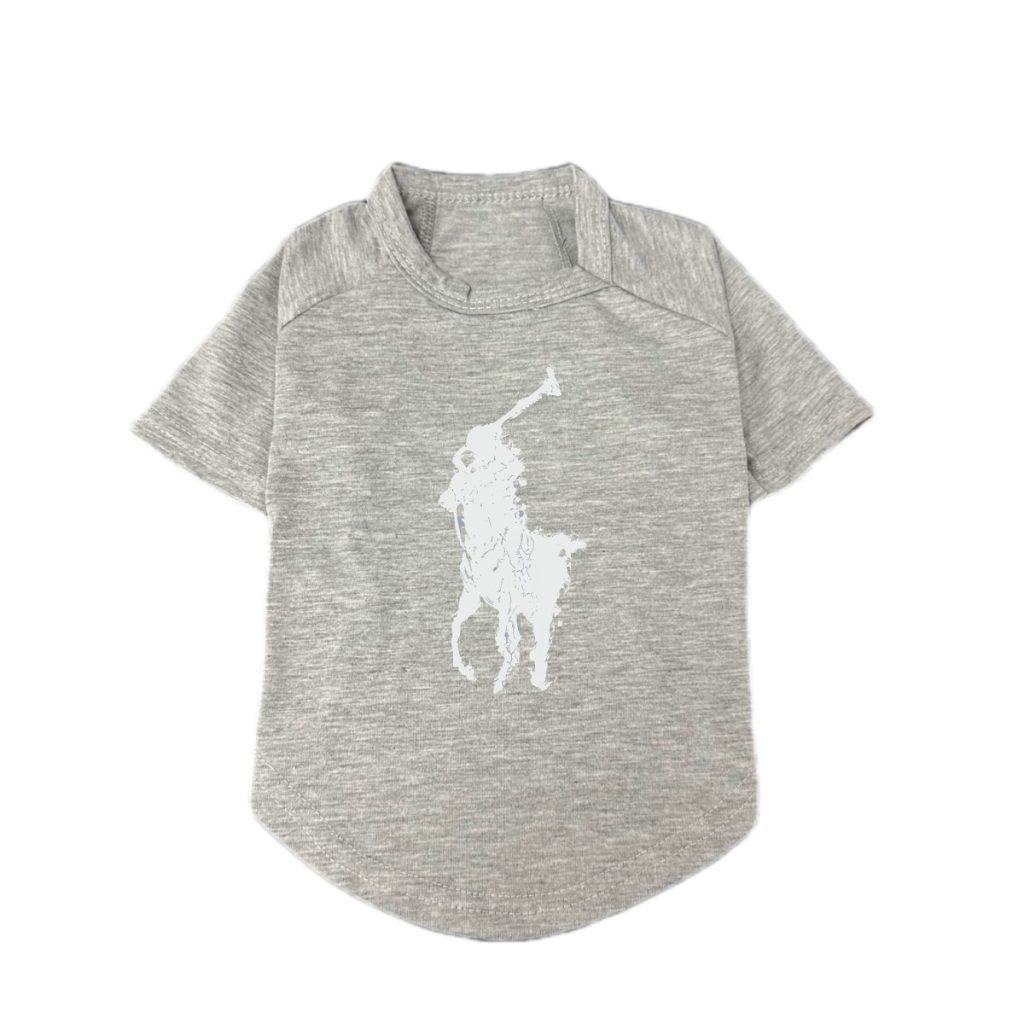
Dog Jerseys vs Hoodies: Which Streetwear Look Suits Your Dog?
A dog jersey is a lightweight mesh or jersey-knit pullover built for airflow and graphics. A dog hoodie is a fleece-backed sweatshirt built for warmth. That single difference drives every other decision. Pick a jersey when the temperature is above roughly 60°F (15°C), or any time your dog has a thick double coat. Pick a hoodie when the temperature sits between about 32°F and 55°F (0°C to 13°C) and your dog has a short, single coat. Everything below is the detail behind that rule.
Key takeaways
- A jersey is a style layer, not a warmth layer. Mesh and open-knit jersey add almost no measurable insulation.
- A hoodie is genuine insulation. French terry and fleece-back fabrics trap air against the skin and change how warm your dog actually is.
- Coat type outranks the forecast. Short, single-coated dogs gain real comfort from a hoodie. Double-coated breeds can overheat in one.
- Many dogs dislike the hood up. A hood-down hoodie is a completely legitimate look, and for most dogs it is the better one.
- Chest girth is the measurement that decides fit. Not weight, not breed, not back length.
- Neither garment stays on an unsupervised dog. Remove both indoors and before you leave the house.
What is a dog jersey?
A dog jersey is a sleeveless or short-sleeve pullover cut from mesh or jersey knit, styled after basketball, football or soccer kit. Expect a number on the back, a team-style graphic, contrast binding at the neck and armholes, and a straight or slightly curved hem.
The fabric is the point. Mesh is a knit with deliberate open holes, usually 100% polyester, which moves air and dries fast. Jersey knit is a single-knit fabric with a smooth face and a looped back, typically cotton or a cotton-polyester blend, light enough to drape rather than hold its shape. Neither traps much still air, and still air is what insulates.
Practically, a dog jersey weighs very little, covers the back and upper ribs, leaves the belly open, and does almost nothing to warm your dog. It is the pet equivalent of a graphic tee: chosen for how it reads, not what it does. Our closest equivalents live in the shirts and tees for dogs range, where mesh and light jersey-knit pieces sit alongside printed cotton styles.
What is a dog hoodie?
A dog hoodie is a hooded sweatshirt for dogs, usually cut from French terry or fleece-back fabric, with a hood at the neck and often a decorative kangaroo-style pouch on the back.
French terry is a knit with uncut loops on the inside face. It is mid-weight, breathes reasonably well, and feels like a classic gym sweatshirt. Fleece-back fabric takes the same construction and brushes the loops into a soft, dense pile, which traps more air and insulates considerably better. A fleece-back hoodie is warm. A French terry hoodie is a transitional layer.
Coverage is the second difference. A hoodie typically runs further down the ribs and sometimes further back along the topline than a jersey, has ribbed cuffs and hem to seal gaps, and adds a hood that covers the back of the skull and the base of the ears. Our dog hoodies collection spans both weights, from light French terry pullovers to properly fleeced winter pieces.
Dog jersey vs dog hoodie: the full comparison
| Dog jersey | Dog hoodie |
Typical fabric | Polyester mesh, cotton or poly-cotton jersey knit | French terry, fleece-back knit, often with 5-10% elastane |
Warmth | Negligible. Adds roughly nothing in still air | Real. Fleece-back traps air and measurably reduces heat loss |
Breathability | Excellent. Mesh is engineered for airflow | Moderate to low. Fleece-back is the least breathable |
Weight (small dog size) | Roughly 1-2 oz / 30-60 g | Roughly 3-7 oz / 85-200 g |
Coverage | Back and upper ribs. Belly open, legs free | Neck to mid-back or lower ribs, plus hood. Often sleeved |
Freedom of movement | High. Sleeveless cuts leave the shoulder fully free | Variable. Depends entirely on sleeve and armhole geometry |
Hood factor | None | Present. Can be worn down, and often should be |
Layering ability | Works as a top layer over a long-sleeve base | Works as a mid-layer under a shell or puffer |
Best temperature range | 60°F and up (15°C+) | 32-55°F (0-13°C) |
Activity suitability | Walks in mild weather, play, travel, photos | Cool-weather walks, lounging, cold-evening outings |
Photo and style impact | High. Bold graphics, clear silhouette, reads sporty | High. Reads relaxed streetwear, hides body shape more |
Washing and durability | Easy. Mesh dries fast, but snags on claws and brush | Pills over time at friction points. Prints need care |
Approximate market price band | Typically around $20-40 | Typically around $25-60, higher for designer-inspired pieces |
Best-suited dogs | Double-coated breeds, thick-coated dogs, warm climates, high-energy dogs | Short single-coated and thin-coated dogs, small dogs, seniors, cold climates |
Which one suits your climate?
Use the temperature, then adjust for your dog’s coat. These ranges assume dry conditions, little wind, and a healthy adult dog on a normal walk.
Temperature | What to put on a short, single-coated dog | What to put on a double-coated dog |
Above 70°F / 21°C | Nothing. A mesh jersey indoors for photos only | Nothing |
60-70°F / 15-21°C | Mesh jersey, purely for style | Mesh jersey or nothing |
50-60°F / 10-15°C | Light French terry hoodie, hood down | Mesh jersey |
40-50°F / 4-10°C | Fleece-back hoodie | Nothing needed, or a jersey for style |
32-40°F / 0-4°C | Fleece-back hoodie, short outings | Nothing needed |
Below 32°F / 0°C | Hoodie as a base layer under an insulated coat | Nothing needed for most |
The American Kennel Club notes that lean dogs with short fur, such as Whippets and Greyhounds, frequently benefit from a sweater in cold weather because they carry little fur or body fat to insulate them, while healthy large breeds with a thick coat generally do not need one and could even overheat in one. For a figure to work from, PetMD puts the point where cold starts to become a problem for most dogs at below 45°F (7°C), which is roughly where a short-coated dog is worth dressing. Below freezing, a hoodie on its own is not enough for a Whippet or an Italian Greyhound. Treat it as the mid-layer and put a wind-resistant shell over the top.
Layering in the other direction works too. A mesh jersey over a plain long-sleeve base layer extends the jersey’s season into the 50s°F (10-15°C) and gives you the layered look that makes streetwear read as styled rather than thrown on.
Coat type decides more than the forecast
Dogs regulate temperature mainly by panting, not sweating. They have only a limited number of sweat glands in their paw pads, so their coat and their airway do nearly all the thermoregulatory work. Adding fabric interferes with both.
Short and single-coated dogs: the hoodie group
A single coat is one layer of hair with no dense insulating undercoat. French Bulldogs, Boston Terriers, Whippets, Italian Greyhounds, Chihuahuas and Pit Bull-type dogs all fall here, and several of them are also lean with very little subcutaneous fat. These dogs lose heat fast, and a fleece-back hoodie makes a genuine difference to their comfort on a cold walk.
PetMD notes that small, light-bodied and thin-coated dogs, along with older dogs and dogs with conditions that impair hair growth, benefit from an added layer. If your dog shivers at the door, tucks up, or tries to turn back within the first minute of a cold walk, that is your answer.
Double-coated dogs: the jersey group
A double coat is two layers: a coarse topcoat that repels dirt and water, and a dense woolly undercoat that traps air. The AKC describes the undercoat as insulating in winter and, in warm weather, helping regulate temperature by trapping cooler air near the skin. Siberian Huskies, Alaskan Malamutes, Samoyeds, German Shepherds and Pomeranians all carry one, and Pomeranians and Samoyeds carry the densest triple or “arctic” version.
These dogs arrive with the insulation already installed. PetMD is direct about it: larger dogs with dense coats do not need additional insulation and would be very uncomfortable in outer clothing, possibly to the point of physically overheating. A fleece-back hoodie on a Samoyed is not a style choice, it is a heat-retention problem.
For a double-coated dog who is going to wear something, a mesh jersey is usually the only sensible option. It sits on top of the coat, it does not compress the undercoat, and air still moves through it. Even then, keep sessions short and watch the dog rather than the clock.
Brachycephalic dogs: extra caution either way
Brachycephalic means short-muzzled. French Bulldogs, Pugs, Boston Terriers and Bulldogs have compressed upper airways, which makes panting less efficient. VCA Animal Hospitals notes that in these breeds, signs of heat stroke can appear when outside temperature and humidity are only moderately elevated.
This creates a real tension: a Frenchie has a single coat and genuinely benefits from a hoodie in the cold, but has far less margin for error if the layer is too warm. The practical answer is to dress a brachycephalic dog for the actual walk, not for the photo, and to take the garment off the moment you are back inside.


The hood question: do dogs actually tolerate hoods?
Many do not, and the marketing never says so. A hood up on a dog’s head sits across the back of the skull and around the ear bases. That does three things: it narrows peripheral vision, it muffles and distorts hearing, and it adds a moving, touching sensation to a part of the body most dogs are sensitive about.
Dogs read the world through their ears and their visual periphery. Take both down and some dogs become visibly unsure. Add a hood that slips forward over the eyes on a hard sniff and you have a dog who has learned that clothes are unpleasant.
None of this makes hoodies a bad buy. It makes the hood an optional feature rather than the reason to buy. A hood worn down is still a hood: it fills out the neckline, gives the silhouette its shape, and is arguably the better look anyway.
How to test hood tolerance in five minutes
- Put the hoodie on with the hood down. Let your dog move around indoors for a few minutes. If the garment itself is a problem, stop here.
- Rest the hood up for two seconds, then take it down. Pay for it with a treat. Do this three or four times.
- Watch the signals. Freezing in place, a lowered head, ears pinned, lip-licking, a paw lifted at the hood, shaking it off, or walking backwards all mean no. A loose body, a normal gait and a wagging tail mean carry on.
- Extend slowly. Five seconds, then fifteen, then a short walk down the hall. Never go straight from a hood up to a busy street.
- Accept the answer. If after a handful of sessions your dog still shakes the hood off, that dog wears it down. There is no welfare cost and no style cost.
If your dog resists the whole garment rather than just the hood, the problem is usually fit or the over-the-head entry, not the concept of clothing.
Movement and fit: where most owners go wrong
A jersey or hoodie that restricts the shoulder changes how your dog walks. That is the single most common fault, and it is almost always a sizing or geometry problem rather than a quality problem.
Chest girth is the measurement that matters
Chest girth is the circumference of the deepest part of the rib cage, measured just behind the front legs. It is the number that determines whether a garment fits, because it is the largest fixed dimension the fabric has to clear.
Measure with a soft tape, snug but not compressing the coat, with your dog standing. Then take neck circumference and back length from the base of the neck to the base of the tail. Weight is a weak proxy: two 18 lb dogs can be three sizes apart. A deep-chested Whippet and a barrel-chested Pug of the same weight need completely different cuts.
Compare your numbers against our size and fit guide before ordering, and if you are buying for a growing puppy, the dog size calculator will give you a realistic adult target so you are not replacing the garment in six weeks.
Sleeves, armholes and gait
Sleeves look good and cost mobility. A dog’s shoulder blade slides along the rib cage as the leg swings forward, so a sleeve that grips the upper arm shortens the stride and produces that short, stilted trot you see in badly fitted dog clothes.
Two constructions handle this differently:
- Raglan sleeve: the sleeve seam runs diagonally from the armpit to the neckline, with no seam over the shoulder joint. More room, more stretch, and better for dogs. Most well-made dog hoodies use it.
- Set-in sleeve: a seam circles the shoulder joint. Sharper silhouette, less movement. Fine on a loose fit, restrictive on a snug one.
Sleeveless jerseys sidestep the problem entirely, which is one of the underrated reasons athletic dogs do better in them. Whichever you choose, do a walk test on carpet before the first outing. Any change in stride length means size up or switch cut.
Harness compatibility
A jersey is the easier garment to combine with a harness. It is thin, so the harness sits on top without bulk, and a sleeveless cut leaves the chest strap path clear.
Hoodies need more thought. Look for a D-ring slot, a reinforced opening on the back that lets a harness ring or leash clip pass through the fabric. Without one you have two options: harness over the hoodie, which works but compresses the fleece and reduces its warmth, or harness under the hoodie, which keeps the fit secure but means undressing the dog to adjust anything. Over is usually the right call for a walk; just re-check the chest strap tension once the layer is on, since fabric under a strap changes the effective fit.
Breathability and overheating: the non-negotiables
Clothing reduces a dog’s ability to shed heat. That is the whole mechanism by which a hoodie works, and it is also the risk.
Hyperthermia means an abnormally elevated body temperature. VCA Animal Hospitals puts the threshold at above 103°F (39.4°C), with readings above 106°F (41°C) typically associated with environmental heat, and describes the critical zone for organ failure at roughly 107-109°F (41.2-42.7°C). Heat stroke escalates fast and it is an emergency.
Signs of heat stress to watch for, per the AVMA’s warm weather pet safety guidance: anxiousness, restlessness, excessive panting, excessive drooling, unsteadiness, abnormal gum and tongue color, and collapse. Bright red gums, frantic panting, lethargy and a sudden urge to lie on cool tile are all early warnings. If you see them, remove the garment, move your dog somewhere cool, offer water and call a vet.
Three rules that apply to both garments:
- Never leave either on an unsupervised dog. Fabric catches, hoods slip, and a dog alone in a warm room cannot take a hoodie off. PetMD is explicit that garments with leash attachment points are meant for supervised wear only and should come off when the dog is left alone.
- Remove it indoors. Your house is warmer than the street and your dog has no walk to justify the layer.
- Check in at the five-minute mark. Slide two fingers under the fabric at the chest. Warm is fine, hot and damp is not.
For a fuller treatment of the thresholds, see our guide on how hot is too hot for dogs.
Fabric and construction: what you are actually paying for
Mesh (polyester): maximum airflow, dries in minutes, holds screen prints well. Snags on claws and rough brush. Best for jerseys in genuinely warm conditions.
Cotton jersey: soft, breathable, comfortable against skin, but it absorbs moisture and stays damp. Good for dry mild days and indoor wear, poor in rain.
French terry (cotton or cotton-poly): the sweet spot for transitional weather. Warmer than jersey, more breathable than fleece, holds its shape.
Fleece-back: the warmest of the four and the least breathable. This is what makes a hoodie a real winter garment. It also pills at friction points, so expect the underarms and the harness contact zone to fuzz first.
Elastane (also sold as spandex): 5-10% in the blend gives the fabric recovery, which matters enormously on a dog. It lets the garment stretch over the rib cage during entry and spring back so it does not sag into a hazard. A knit with no elastane will bag out within a season.
Ribbed cuffs and hem: a tighter 2×1 or 1×1 rib at the openings keeps the garment in position and stops drafts. Check the rib is firm but not tight enough to mark the leg. A loose cuff that rides up and bunches at the elbow is a chafing risk.
What makes a good dog hoodie
Five things separate a hoodie worth keeping from one that lasts a season.
- Fabric weight matched to the job. Mid-weight French terry, roughly 240-280 gsm, for 50-60°F. Fleece-back from about 300 gsm up for anything colder. A thin single-knit hoodie is a jersey with a hood attached and will not keep a Whippet warm.
- A cut drafted for a dog. Chest circumference should be the generous dimension, not back length. Look for a raglan or deeply curved armhole, a hem that stops short of the belly so it stays dry, and a neck opening that clears the skull without needing force.
- A hood with structure. A lined or two-panel hood sits behind the skull and keeps its shape worn down, which is how most dogs will wear it. A single unshaped panel slides forward over the eyes on the first hard sniff.
- Harness provision built in. A reinforced D-ring slot, or a back opening wide enough to pass a leash clip, means you are not choosing between the layer and the harness.
- Durability markers you can check in the photos. Flat or covered seams at the underarm rather than a bulky overlock, bar-tacking at stress points, firm ribbing that springs back when stretched, and a stated elastane percentage. Loose armpit seams are the first thing to fail.
Graphics: which decoration survives
- Screen print: ink pushed through a mesh stencil onto the fabric. Cheapest, sharpest colors, best for bold streetwear graphics. Cracks over time, and cracks fast if you tumble dry it hot.
- Embroidery: stitched thread. Most durable by a wide margin and it reads as premium, but it adds stiffness and weight. Avoid dense embroidery in the shoulder area on a small dog.
- Twill patch: a woven fabric panel appliquéd on, usually with a satin-stitch border. The authentic sports-jersey method for numbers and letters, extremely durable, and it will outlive the garment. Slightly heavier and it can curl at the corners if the stitching is sparse.
If you want the graphic to still look good next season, twill patch beats embroidery beats screen print.
-
Louis Pawtton Hero Brown Checkered Designer Leather Dog Harness and Leash Set
$35.00 – $94.50Price range: $35.00 through $94.50 -
Pawcci Designer Dog Harness And Leash Set
$59.50Original price was: $59.50.$39.00Current price is: $39.00.Rated 5.00 out of 55.0 (7) -
Furry Berry Plaid Bow Tie Dog Collar And Leash
$20.00 – $35.00Price range: $20.00 through $35.00 -
Furdi FF Monogram Designer Dog Harness And Leash
$26.00 – $57.50Price range: $26.00 through $57.50Rated 5.00 out of 55.0 (2)


How to style each one
The jersey look
A jersey carries the whole outfit, so keep everything else quiet. Match the hardware to the graphic: gold hardware with warm colorways, gunmetal or black with cool ones. A flat webbing collar in a single color from the jersey’s palette, a matching leash, and nothing else. If you want a chain, pick one and skip the collar, because both at once is a lot of neck.
Pull one accent color from the graphic and repeat it once. Twice if you are feeling confident. Three times is a costume.
The hoodie look
A hoodie is quieter and lets you add a second piece: a cap for a photo but not a walk, and a harness in a contrasting neutral rather than a matching print. Tonal layering reads most expensive: a gray hoodie, a black harness, a black leash with a gray accent.
Oversized reads as intentional on a dog with a long back. On a compact dog like a Frenchie, oversized reads as borrowed. Size down and keep it close.
What reads as intentional vs costume-y
Reads intentional | Reads like a costume |
One graphic piece, the rest neutral | Multiple competing logos |
Two or three colors total | Head-to-tail printed sets |
Hardware that matches across pieces | Novelty hood up on an uncomfortable dog |
Fit that follows the dog’s actual shape | Oversized on a compact breed |
Hood down | Hats on a walk |
Our hypebeast dog fashion guide goes deeper on building a coherent look, and the designer dog brand collections are a good place to see which house aesthetic suits your dog’s coloring before you commit.
Matching the occasion
- Game day: jersey, every time. A mesh jersey with a number is the only piece on this list that has an obvious reason to exist.
- Daily walk, mild weather: jersey or French terry hoodie, hood down.
- Cool-evening walk: fleece-back hoodie.
- Travel: hoodie. Carriers, cars and terminals are all unpredictable temperatures, and a hoodie you can take off beats a jersey you cannot add to.
- Photoshoot: jersey for graphics and silhouette, hoodie for mood and texture. Both off within ten minutes.
- Indoor lounging: neither, unless your dog is thin-coated and your home is cold.
For a full sport look that commits harder than either, the Adidog tracksuit with hood is the two-piece version of this conversation, and the Adidog collection covers the sport-stripe look across both garment types. If you want to match, the owner and dog matching outfits range handles that without tipping into novelty, provided you keep your own piece plainer than your dog’s.
Care and washing
Both garments last longer with the same routine, and the decoration is what fails first.
- Turn it inside out before washing. This protects the print and moves pilling to the inside face.
- Cold wash, 30°C or below, gentle cycle. Heat is what cracks screen prints and shrinks cotton jerseys.
- Use a mesh laundry bag for jerseys. Open mesh snags on zippers and other garments.
- Skip the fabric softener. It coats fleece fibers, flattens the pile and reduces warmth.
- Air dry flat. Tumble drying is the main cause of cracked prints and of ribbing losing its grip. Hang drying a heavy wet hoodie stretches the shoulders, so dry it flat.
- Manage pilling with a fabric shaver or a pumice stone on the fleece, working in one direction. Do this before the pills mat into a hard patch.
- Wash after every two or three wears, or immediately after rain. Damp fabric against skin for hours invites irritation, particularly in a dog with skin folds.
A hoodie washed this way holds its shape for years. A hoodie tumble-dried hot looks tired in a month.
The verdict: a simple decision rule
Choose a jersey if: your dog has a double coat, you live somewhere warm, your dog is high-energy, you want maximum graphic impact, you need something to pair with a harness, or you are dressing for a game rather than for the weather.
Choose a hoodie if: your dog has a short single coat, you live somewhere with a real winter, your dog is small, lean, old or thin-coated, you want a layer that does something, or you want one piece that works across a wide temperature range.
Get both if: you live anywhere with four seasons. This is most people. A mesh jersey covers roughly 60°F and up, a fleece-back hoodie covers roughly 32-55°F, and between them you have the whole year handled. The Adidog Origipaws dog hoodie is a good sport-styled starting point if you want the athletic look in a warm fabric, and the classy dog hoodie is the plainer option that layers under anything.
Choose neither if: your dog is a healthy, thick-coated, large breed and the weather is mild. There is no welfare reason to dress that dog, and there is a real reason not to.
FAQ
Is a dog jersey warm enough for winter?
No. A mesh or jersey-knit garment adds almost no insulation, because insulation comes from trapped still air and mesh is designed to move air through. In winter a jersey is a style layer at best. For a short-coated dog below about 45°F (7°C), use a fleece-back hoodie, and below freezing put an insulated coat over it.
Can a Husky or a Pomeranian wear a hoodie?
It is not recommended. Both are double-coated and already carry dense insulation, so an added fleece layer traps heat they need to release. PetMD notes that dense-coated dogs can be very uncomfortable in outer clothing, possibly to the point of physically overheating. If you want to dress a double-coated dog, use a mesh jersey, keep the session short and watch for panting.
Do dogs mind having the hood up?
Many do. A raised hood narrows peripheral vision, muffles hearing, and can slip over the eyes. Some dogs ignore it entirely and others find it genuinely aversive. Test it in short two-second intervals indoors and read the body language: freezing, pinned ears, lip-licking or pawing at the hood all mean leave it down. A hood-down hoodie is perfectly fine.
Can my dog wear a harness over a jersey or hoodie?
Yes, and a jersey is the easier of the two because it adds no bulk under the straps. For a hoodie, look for a built-in D-ring slot so the leash clip passes through the fabric. If you go harness-over-hoodie, re-check the chest strap tension after dressing, since the extra fabric changes the effective fit.
How do I know if my dog is overheating in clothes?
The AVMA’s signs of heat stress are anxiousness, excessive panting, restlessness, excessive drooling, unsteadiness, abnormal gum and tongue color, and collapse. In a dressed dog, also watch for lethargy and a sudden urge to lie on cool tile or concrete. Remove the garment immediately, move your dog somewhere cool, offer water, and contact a vet if the signs do not resolve quickly.
What size dog jersey or hoodie should I buy?
Size by chest girth first, measured around the deepest part of the rib cage just behind the front legs. Then check neck circumference and back length from the base of the neck to the base of the tail. Weight alone is unreliable, because a deep-chested Whippet and a barrel-chested Pug of the same weight need different cuts. Compare your numbers against the brand’s actual chart rather than assuming a size runs true.

Top Dog Walking Products for Every Adventure
Make every walk an experience with premium dog walking gear from Supreme Dog Garage. Whether you’re exploring the neighborhood or hitting the trails, our curated selection of leashes, harnesses, collars, and accessories combines style, comfort, and durability, perfect for every pup and their person.