

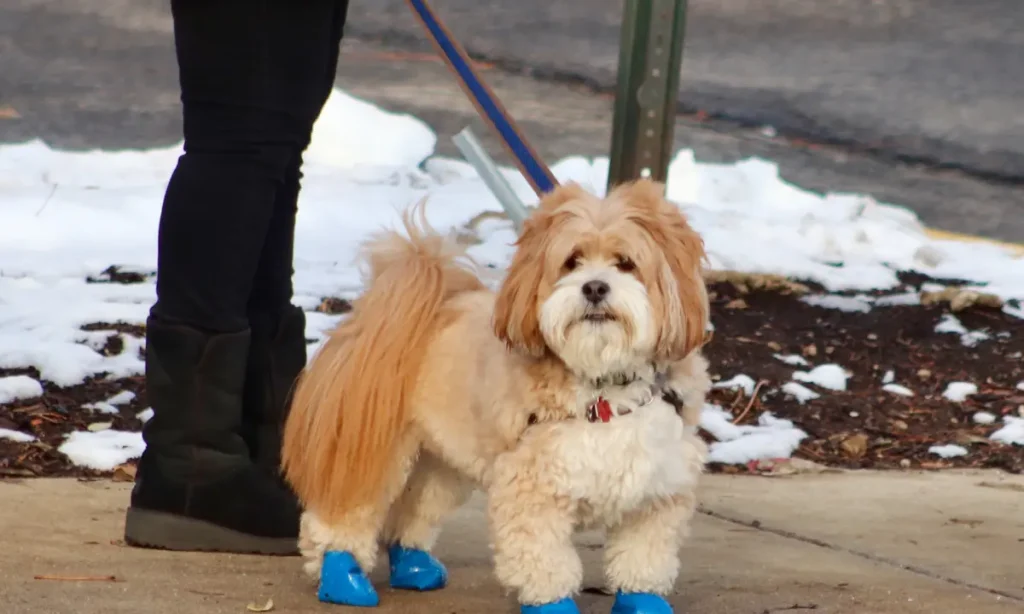
Do Dogs Need to Wear Boots in the Snow
Updated on September 11, 2026
If you’ve ever watched your dog trot happily across a frozen sidewalk and wondered whether their bare paws are actually okay down there, you’re not alone. Winter brings a strange kind of guilt for dog owners: you’re bundled in a coat, gloves, and boots, while your dog walks the same salted, icy path with nothing but skin and fur covering their feet. The problem isn’t just discomfort. Cold pavement, road salt, and packed ice can genuinely hurt a dog’s paws, and most owners have no clear idea when that risk becomes real versus when it’s just something ads and pet stores want you to worry about.
Here’s the short answer: most dogs can handle a quick walk in mild snow without boots, because their paws are naturally built to resist cold better than human feet. But that natural protection has limits. Once temperatures drop low enough, walks get long enough, or the ground is coated in salt and chemical de-icers, boots stop being optional and start being a genuine safety measure. The rest of this guide breaks down exactly where that line sits, which dogs need boots more than others, and how to get your dog comfortable wearing them.
How Dogs’ Paws Naturally Handle Cold and Snow
Dog paws are built differently from human feet, and that difference explains why your dog can stand on snow without flinching while you’d be hopping in pain within seconds. The pads are made of thick, pigmented skin layered over fat and elastic fiber, which acts as a natural cushion and insulator. This layer alone slows down heat loss and protects the paw from rough or freezing surfaces far better than the skin on any other part of a dog’s body.
But the real reason dogs handle cold so well comes down to blood flow. Veterinary research shows that dogs have a specialized circulatory setup in their paws, where warm arterial blood runs close to veins carrying cooler blood back toward the heart. This arrangement, known as countercurrent heat exchange, lets warm blood transfer heat directly to the returning blood before it reaches the paw pads, keeping the pads from cooling too fast even when standing on ice or packed snow.
This system is impressive, but it isn’t unlimited. It slows down cold damage it doesn’t prevent it. Once a paw pad sits on ice or freezing pavement long enough, the tissue still loses heat faster than it can recover, and the same biology that makes short-term cold tolerance possible offers no protection against prolonged exposure, road chemicals, or sharp debris hidden under snow.
So, Do Dogs Actually Need Snow Boots? The Honest Answer
No single yes-or-no answer applies to every dog, and any article claiming otherwise oversimplifies a decision that depends on real, specific conditions. Whether your dog needs boots comes down to five factors working together: how cold it actually is, how long the walk will last, what kind of surface you’re walking on, your dog’s breed and coat type, and your dog’s individual health.
A short walk in clean, fresh snow at a mild temperature is very different from a 30-minute walk on a salted city sidewalk in single-digit weather. The first scenario rarely calls for boots. The second one almost always does.
|
Boots Usually Optional |
Boots Usually Recommended |
|
Short walks (10–15 minutes) in fresh, clean snow |
Walks longer than 20–30 minutes in freezing temperatures |
|
Temperatures above 25°F (-4°C) |
Temperatures below 20°F (-6°C) |
|
Healthy adult dog with a thick or double coat |
Puppy, senior, or small/short-coated dog |
|
Snow-covered ground with no visible salt or chemical treatment |
Sidewalks or roads treated with salt or de-icing chemicals |
|
Dog shows no discomfort, limping, or paw-lifting |
Dog has shown paw sensitivity or discomfort in past cold walks |
If most of your situation lines up with the left column, your dog will likely be fine without boots. If two or more items from the right column apply, boots are worth using.


Quick Self-Check: Does Your Dog Need Boots Today?
Instead of guessing, run through a short checklist before heading out the door. This isn’t about general winter advice; it’s about the specific walk you’re about to take, right now, in today’s conditions.
- Is the temperature below 20°F (-6°C), or does wind chill make it feel that cold?
- Will you be walking on salted sidewalks, treated roads, or areas with visible ice-melt residue?
- Is your dog a puppy, a senior, or under 20 pounds?
- Does your dog have a short, thin coat rather than a thick double coat?
- Has your dog ever limped, lifted a paw, or stopped walking during a past cold-weather outing?
- Will the walk last longer than 15–20 minutes?
- Does your dog have a health condition like arthritis, diabetes, or poor circulation?
If you checked two or more of these boxes, put the boots on before you leave. It’s a small step that prevents a much more uncomfortable situation halfway through the walk.
Which Dogs Are Most and Least at Risk in the Snow
Not every dog faces the same level of risk in cold weather, and breed plays a bigger role in this than most owners realize. Dogs bred for cold climates carry genetics built for snow, while dogs bred for warm regions or bred down to small, toy sizes often struggle the moment temperatures drop.
|
Cold Tolerance |
Examples |
Why |
|
High |
Siberian Husky, Alaskan Malamute, Bernese Mountain Dog, Saint Bernard, Newfoundland |
Dense double coats and a body built for snow and cold-weather work |
|
Moderate |
Labrador Retriever, Golden Retriever, German Shepherd |
Decent coat insulation, but still susceptible to prolonged cold exposure |
|
Low |
Chihuahua, Greyhound, French Bulldog, Dachshund, other small or short-coated breeds |
Thin coats, low body fat, and a higher surface-area-to-body-size ratio that loses heat fast |
Age and health matter just as much as breed. Puppies haven’t fully developed their temperature regulation yet, and senior dogs often have slower circulation, arthritis, or other conditions that make cold exposure riskier. Dogs recovering from illness, managing diabetes, or dealing with any circulatory issue also lose the natural cold protection that a healthy adult dog relies on.
Even the most cold-tolerant breeds aren’t automatically exempt from boots. Sled dogs used in skijoring and dog mushing are chosen specifically for their cold-weather genetics, yet working sled teams, including those competing in the Iditarod, routinely wear boots. The reason isn’t warmth; it’s protection from ice buildup, abrasion, and long hours of repeated contact with frozen ground. If professional sled dogs need boots for extended cold exposure, it’s a reasonable sign that any dog facing similar conditions could benefit too.
Winter Hazards Boots Actually Protect Against
Boots aren’t just about keeping paws warm; most of their real value comes from blocking specific hazards that show up as soon as snow and ice hit the ground. Understanding these hazards makes it much easier to judge when boots matter.
Road salt and chemical de-icers. Sidewalks and roads are frequently treated with sodium chloride or calcium chloride to melt ice. These chemicals clear pavement, but they’re harsh on paw pads, causing irritation, dryness, and, in some cases, chemical burns, especially with repeated exposure over a winter season.
Snowballs between the toes. Snow can pack tightly into the fur and gaps between paw pads, forming hard, icy clumps. These “snowballs” are uncomfortable at best and can force a dog to walk awkwardly or stop moving altogether, especially in breeds with longer fur between their toes.
Frostbite risk. Extended exposure to freezing temperatures can reduce blood flow to the paws enough to cause tissue damage. Paw pads, ear tips, and the tail are among the areas most vulnerable to frostbite because they’re farthest from the body’s core warmth.
Hidden sharp debris. Snow cover hides plenty of hazards: broken glass, sharp ice shards, and salt-crusted gravel are common on winter sidewalks and can cut into unprotected paw pads without warning.
Slippery surfaces. Ice and packed snow significantly reduce traction. Boots with textured rubber soles give dogs better grip than bare paws on slick pavement, lowering the risk of slips and falls that can lead to sprains or joint injuries.
Warning Signs of Frostbite and Cold-Related Paw Damage
Knowing what to watch for during and after a cold-weather walk is just as important as deciding whether to use boots in the first place. Cold damage doesn’t always show up immediately, so watching your dog’s behavior and paw condition can catch a problem before it worsens.
Watch for these signs during or after time outdoors:
- Pale, gray, or bluish skin on the paw pads
- Limping, refusing to walk, or repeatedly lifting one paw off the ground
- Ice clumps between the toes that don’t brush out easily
- Cracked, blistered, or bleeding paw pads after a walk
- Excessive licking or chewing at the paws once back indoors
- Noticeable stiffness or reluctance to keep walking
If you notice pale or discolored skin, cracked pads that don’t improve with basic care, or a dog that’s clearly in pain after a cold-weather walk, contact your veterinarian. Frostbite can worsen over the next few hours, even after a dog is brought back indoors, so early attention matters more than waiting it out.
How Long Can a Dog Safely Be in the Snow Without Boots?
Time outdoors matters just as much as temperature. A dog can usually handle a few minutes on cold ground without issue, but risk builds the longer paws stay in contact with snow, ice, or freezing pavement.
|
Temperature Range |
Recommended Time Without Boots |
Notes |
|
32–40°F (0–4°C) |
Short walks generally fine |
Monitor for paw-lifting or reluctance |
|
20–32°F (-6–0°C) |
Limit to 15–20 minutes |
Watch closely, especially on salted ground |
|
Below 20°F (-6°C) |
Boots strongly recommended |
Keep outdoor time brief even with boots |
|
Below 0°F (-18°C) |
Boots and a jacket recommended |
Minimize outdoor time to quick bathroom breaks |
These numbers are a starting point, not a strict rule. Wind chill can make the air feel far colder than the thermometer shows, wet snow pulls heat away faster than dry snow, and every dog has a different personal cold tolerance based on size, coat, age, and health. Use this table as guidance, then adjust based on how your own dog is actually responding on a given walk.
Dog Boots vs. Paw Wax and Balm: Which Protection Do You Actually Need?
Paw wax and boots solve overlapping, but different problems, and knowing the difference helps you choose the right protection instead of guessing. Paw wax and balm create a thin, flexible barrier over the paw pads. This barrier helps block moisture and offers some resistance to salt and mild chemical exposure, and it’s a good option for dogs who won’t tolerate boots or for quick bathroom breaks where a full boot setup feels unnecessary. What wax doesn’t do is insulate, prevent ice from packing between the toes, or add traction on slick surfaces.
Boots, by contrast, provide a complete physical barrier. They block cold, salt, sharp debris, and ice buildup all at once, and a good pair adds real traction on icy ground through a textured rubber sole. The trade-off is that boots require a proper fit and some training time before a dog walks naturally in them.
|
Factor |
Paw Wax/Balm |
Boots |
|
Cold insulation |
Minimal |
Strong |
|
Salt/chemical protection |
Partial |
Full |
|
Ice buildup prevention |
No |
Yes |
|
Traction on ice |
None |
Yes, with textured soles |
|
Ease of use |
Very easy, no training needed |
Requires fitting and training |
|
Best for |
Quick potty breaks, dogs who reject boots |
Longer walks, salted sidewalks, cold-sensitive dogs |
Many owners find the best approach is using both wax for short trips outside and boots for actual walks, hikes, or any extended time on treated or icy ground.
-
Pawcci Designer Dog Harness And Leash Set
$59.50Original price was: $59.50.$39.00Current price is: $39.00.Rated 5.00 out of 5 -
Furdi FF Monogram Designer Dog Harness And Leash
$26.00 – $57.50Price range: $26.00 through $57.50Rated 5.00 out of 5 -
Furry Berry Plaid Bow Tie Dog Collar And Leash
$20.00 – $35.00Price range: $20.00 through $35.00 -
Louis Pawtton Hero Brown Checkered Designer Leather Dog Harness and Leash Set
$35.00 – $94.50Price range: $35.00 through $94.50


Types of Dog Snow Boots
Not all dog boots are built for the same purpose, and picking the wrong style can leave a dog with boots that slip off, trap moisture, or simply don’t hold up to real winter conditions.
Classic strap booties are the most common style, with a soft fabric top and a rubber sole secured by a Velcro strap around the ankle. They’re a solid all-around choice for regular winter walks but aren’t fully waterproof, so they work best on packed snow rather than slush or standing water.
All-weather rubber boots offer full waterproof coverage and tend to hold up best in wet, slushy conditions or heavier snowfall. They’re a better choice for dogs walking through deep snow or repeatedly exposed to melting ice.
Sock-style or fleece boots are soft and comfortable but offer the least protection. These work best for light indoor use or very mild, brief outdoor conditions, not real snow or ice.
Disposable snow booties are a low-cost, single-use option, useful as a backup for unexpected weather or for owners who only need occasional protection rather than a full-season solution.
Sport and sled-style boots are built tougher, with reinforced soles and closures designed for hiking, skijoring, or working dogs who spend extended time on rough or icy terrain.
How to Choose the Right Snow Boots for Your Dog
Picking the right pair comes down to a handful of practical features that make the real difference between boots your dog tolerates and boots that end up abandoned in a drawer.
Look for waterproof or water-resistant material first, since wet paws in freezing temperatures cause far more discomfort than dry cold. A non-slip, textured rubber sole matters just as much, giving your dog actual grip on ice rather than a false sense of protection. The closure should be secure but adjustable tight enough to stay on during movement, loose enough not to cut off circulation. A breathable lining helps prevent moisture from building up inside the boot during longer walks, and reflective trim adds a real safety benefit for dogs walked during darker winter evenings.
If you’re shopping for gear that checks these boxes, Supreme Dog Garage’s dog boots for walking feature grippy soles and weather-resistant materials designed to handle salted sidewalks and melting snow. Pairing boots with one of our insulated winter dog jackets is a practical option for smaller or short-coated dogs who feel the cold beyond just their paws.
How to Measure Your Dog’s Paw for the Perfect Boot Fit
A poorly fitted boot causes more problems than it solves, so taking a few minutes to measure properly before buying saves frustration later. Start by having your dog stand naturally with weight on all four paws, since a paw spreads out slightly under body weight and measuring it lifted will give an inaccurate, smaller reading. Trace the outline of the paw on a piece of paper, then measure the widest point across the paw and the length from the base of the heel to the tip of the longest nail.
Front and back paws are often different sizes on the same dog, so measure each paw separately rather than assuming one size fits all four. Check the specific brand’s sizing chart as well, since sizing can vary between manufacturers even when the listed measurements look similar. The right fit should feel snug without restricting movement or circulation a boot that’s too loose will slip off mid-walk, while one that’s too tight can cause discomfort just as easily as the cold itself.
How to Train Your Dog to Wear Boots
Most dogs need a short adjustment period before boots feel normal, and rushing this process is the most common reason owners give up too early.
- Let your dog sniff and investigate the boots without putting them on, so they’re familiar with the object before it touches their paws.
- Put the boots on for just a few minutes indoors, rewarding with treats and praise as soon as they’re on.
- Gradually extend the indoor wear time over several days, keeping sessions short and positive rather than forcing longer wear too soon.
- Practice walking on different indoor surfaces like carpet, tile, and hardwood so your dog gets used to the different feel each one creates.
- Take the first outdoor trial on a short, quiet walk with minimal distractions, giving your dog a chance to focus on adjusting.
- Build up to full-length walks once your dog is moving naturally without the exaggerated high-step many dogs show at first.
Patience matters more than speed here. A dog that has one bad first experience with boots can become resistant to wearing them again, so keep early sessions short and rewarding.
What to Do If Your Dog Refuses to Wear Boots
Some dogs adjust to boots within a day, while others take much longer or resist the process altogether. Common signs of resistance include an exaggerated high-stepping walk, freezing in place and refusing to move, or repeatedly chewing and pawing at the boots.
If your dog is struggling, try switching to a different boot style or double-checking the size before assuming boots simply aren’t an option. A boot that’s slightly too tight or made from stiff, unfamiliar material is often the real problem, not the concept of wearing boots itself. Shortening training sessions and increasing the reward value with higher-value treats can also help rebuild a positive association.
For dogs who genuinely won’t tolerate boots even after multiple attempts, paw wax combined with shorter outdoor time and frequent paw checks is a reasonable fallback. It won’t provide the same protection as boots, but it’s far better than no protection at all in cold, salted, or icy conditions.
Caring for Your Dog’s Paws After a Snow Walk
Paw care shouldn’t stop the moment you’re back inside, since salt, chemicals, and ice can still cause irritation after the walk. Rinse or wipe your dog’s paws with lukewarm water to remove any salt or de-icing chemical residue, paying close attention to the areas between the toes where buildup tends to hide. Dry the paws thoroughly afterward, since leaving them damp in a warm house can lead to skin irritation just as easily as leaving them wet outdoors.
Take a moment to check each paw for cracks, redness, or any embedded ice or debris that might have gone unnoticed during the walk. If the pads look dry or slightly cracked, apply paw balm after cleaning to restore moisture and protect the skin before the next outing. For dogs with longer fur between their pads, trimming it down slightly can reduce how much snow and ice packs in during future walks, making the whole winter season more comfortable.
Beyond the Paws: Does Your Dog Need Other Winter Gear Too?
Paws aren’t the only part of a dog’s body affected by cold weather, and focusing on boots alone can leave gaps in protection for certain dogs. Small breeds, short-haired dogs, seniors, and dogs with thin coats often need winter warmth for dogs, and a jacket or sweater can make as much difference to their comfort as boots do for their feet.
If your dog falls into one of these categories, pairing boots with a properly fitted winter dog jacket or dog sweater rounds out their cold-weather protection rather than leaving them covered at the feet but exposed everywhere else.
Frequently Asked Questions
Do all dogs need boots in the snow?
No. Dogs with thick double coats and good cold tolerance can often handle short, mild snow walks without boots. Boots become important for small, short-coated, senior, or puppy dogs, and for any dog facing long walks, extreme cold, or salted surfaces.
What temperature is too cold for dogs to walk without boots?
As a general guide, temperatures below 20°F (-6°C) call for boots on most dogs, and temperatures below 0°F (-18°C) call for both boots and limited outdoor time. Wind chill and individual cold tolerance can shift this threshold.
Can road salt actually hurt my dog’s paws?
Yes. Road salt and chemical de-icers can irritate and dry out paw pads, and prolonged or repeated contact can cause cracking or chemical burns. Rinsing paws after walks on treated surfaces helps reduce this risk.
How do I know if my dog has frostbite?
Watch for pale, gray, or bluish skin on the paw pads, limping, or reluctance to walk. If you see these signs, warm the paws gradually and contact a veterinarian, since frostbite can worsen even after a dog is brought indoors.
Are dog boots better than paw wax?
Boots offer stronger overall protection, including insulation and traction, while paw wax offers a lighter barrier that’s easier to apply. Many owners use wax for quick bathroom breaks and boots for longer walks.
Why does my dog refuse to walk in boots?
This is usually because the feeling underfoot is unfamiliar, not because of pain. Slow, reward-based training and trying a different boot style or size often resolves the issue within a few sessions.
Do sled dogs really wear boots even though they’re bred for cold?
Yes. Sled dogs used in skijoring, mushing, and events like the Iditarod commonly wear boots to protect against ice buildup and abrasion during long hours of work, despite their strong natural cold tolerance.
How often should I replace my dog’s snow boots?
Check boots at the start of each winter season for cracks, worn soles, or loose closures. Boots used regularly on rough or salted terrain typically need replacing every one to two seasons.
Key Takeaways
- Dogs have natural paw insulation and a specialized circulatory system that helps them tolerate short periods of cold, but this protection has clear limits.
- Boots become important with longer walks, extreme cold, salted or chemically treated surfaces, and for puppies, seniors, and small or short-coated breeds.
- Paw wax and boots serve different purposes and work well together rather than as a strict either-or choice.
- A proper fit and a short, reward-based training process make boots far more likely to succeed long-term.
- Checking and cleaning paws after every cold-weather walk helps catch problems early and keeps paw pads healthy through the season.
If you’ve decided boots make sense for your dog this winter, Supreme Dog Garage’s dog walking accessories are worth a look, with grippy, weather-ready boots paired with a winter jacket for dogs who need a little extra warmth beyond their paws.

Top Dog Walking Products for Every Adventure
Make every walk an experience with premium dog walking gear from Supreme Dog Garage. Whether you’re exploring the neighborhood or hitting the trails, our curated selection of leashes, harnesses, collars, and accessories combines style, comfort, and durability, perfect for every pup and their person.
