

How to Train Your Dog to Walk on a Leash?
Reviewed and Updated: June 24, 2026
Training your dog to walk on a leash can feel stressful if every walk turns into pulling, stopping, barking, jumping, or leash biting. we know how frustrating it feels when you want a simple walk around the block, but your dog wants to race to every smell, person, squirrel, or other dog. The good news is that leash training is a learned skill. Your dog does not need harsh corrections or fear-based tools to understand what you want. With the right gear, clear cues, reward timing, and short practice sessions, you can teach your dog to walk calmly beside you, enjoy safe sniff breaks, and feel more confident outdoors.
Quick Answer: How Do You Train a Dog to Walk on a Leash?
To train a dog to walk on a leash, introduce a comfortable harness and a 4–6 foot fixed leash indoors. Use a cue like “let’s go,” and reward your dog with high-value treats whenever the leash remains loose. If your dog pulls, stop moving immediately. Only resume walking once they step back and release the tension. Gradual exposure to the outdoors comes next
Simple Leash Training Steps at a Glance
A simple leash training plan is easier to follow when you break it into small actions. we recommend keeping the first sessions short, calm, and easy. Your dog should feel successful before you move to busy sidewalks, parks, pet-friendly stores, or crowded streets.
- Choose a comfortable harness or collar.
- Use a standard 4–6 foot leash.
- Introduce the gear indoors.
- Reward calm behavior around the leash.
- Teach one walking cue.
- Reward your dog for staying near you.
- Stop when the leash gets tight.
- Continue when the leash loosens.
- Practice in quiet outdoor spaces.
- Add distractions step by step.
What Leash Training Really Means
Leash training means teaching your dog how to move safely with you while attached to a leash. It does not mean dragging your dog, forcing perfect obedience, or making every walk strict. A good leash-trained dog understands how to walk without constant tension, respond to your cues, and stay safe around roads, people, dogs, bikes, and new places. Many dog owners mix up leash walking, loose leash walking, heel training, and sniff walks. These are related, but they are not the same. When you understand the difference, you can train with less confusion and set fair expectations for your dog.
Leash Walking
Leash walking is the basic skill of moving with a leash attached. Your dog can wear a collar or harness, stay connected to you, and walk without panic, freezing, biting the leash, or trying to escape. This is the first goal for puppies, rescue dogs, nervous dogs, and dogs that have never learned leash manners. At this stage, you do not need perfect position. Your dog may walk a little ahead, beside you, or slightly behind you. The main goal is safety, comfort, and confidence. If your dog accepts the leash, moves with you, and does not fight the gear, you have built the foundation for better walking.
Loose Leash Walking
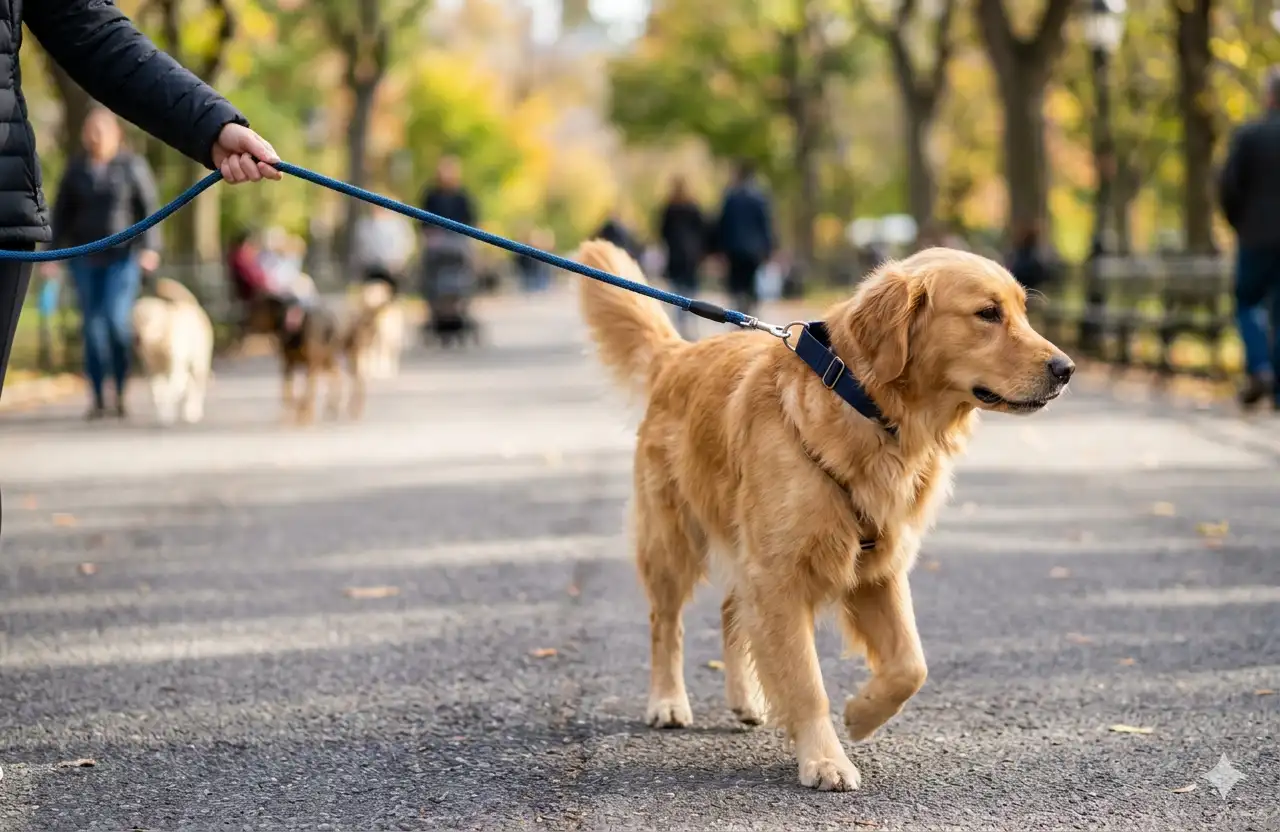
Loose leash walking means your dog walks with slack in the leash. The leash should look relaxed, often like a soft “J” shape between your hand and your dog. Your dog does not have to stare at you the whole time, but they should stay aware of your pace and direction. This is the best goal for most daily walks in American neighborhoods, apartment communities, parks, and sidewalks. Loose leash walking gives your dog room to move naturally while keeping you in control. It is calmer than pulling and more realistic than asking your dog to heel for the entire walk.
Heel Training
Heel training is more structured. Your dog walks close beside your leg, usually on the left or right side, and keeps a steady position. This can be useful near roads, crowds, vet offices, elevators, outdoor dining areas, and busy events.
we do not expect most family dogs to heel for a full 30-minute walk. That can be boring and tiring for the dog. Instead, we prefer using heel for short moments when safety and control matter, then releasing the dog back to loose walking or sniffing when the area is safe.
Free Walk or Sniff Walk
A free walk or sniff walk allows your dog to explore safely. Dogs gather a lot of information through their nose, and sniffing can help them relax, think, and burn mental energy. This is especially helpful for high-energy dogs, young dogs, and dogs that get excited outdoors. A sniff walk is not the same as uncontrolled pulling. Your dog can sniff while still staying within leash range. we like using a cue such as “go sniff” when we want to give a dog free time, then “with me” when we want to return to calm walking.
Why Dogs Pull, Stop, or Struggle on a Leash
Before fixing leash problems, it helps to understand why they happen. Dogs do not pull just to annoy us. Most dogs pull because the environment is exciting, the gear feels strange, or pulling has worked before. Some dogs stop because they feel scared, uncomfortable, or overwhelmed.
If you understand the reason behind the behavior, you can choose the right training response. A dog pulling from excitement needs a different plan than a dog freezing from fear. A puppy chewing the leash needs a different approach than a large adult dog lunging at other dogs.
Pulling Is Often Rewarded by Movement
Dogs learn through results. In training science, this is part of operant conditioning. If your dog pulls and reaches the grass, the fire hydrant, the dog park gate, or another dog, the pulling behavior gets rewarded. Your dog thinks, “Pulling worked.” This is why we do not move forward when the leash is tight during training. If forward movement continues while the dog pulls, the dog learns that pressure works. If forward movement stops when the leash is tight and starts again when the leash is loose, the dog learns that calm walking works better.
Some Dogs Walk Faster Than Humans
Many dogs naturally walk faster than people. Young dogs, working breeds, terriers, hounds, sporting breeds, and energetic mixed-breed dogs may move quickly because their body and brain are ready for action. They may not understand why you walk at a slower human pace. This does not mean your dog is bad. It means your dog needs help learning your walking rhythm. Rewarding check-ins, practicing direction changes, and giving safe sniff breaks can teach your dog to pay attention without making the walk feel like punishment.
Outdoor Distractions Increase Excitement
The outdoors is full of smells, sounds, and movement. A quiet living room is easy. A sidewalk with squirrels, kids, delivery trucks, bikes, strollers, dogs, and food smells is much harder. Your dog may pull or bark because the outside world is more rewarding than your treat pouch. This is why we start in low-distraction places and build up slowly. Training near mild distractions from a safe distance is better than starting in a busy dog park. If the environment is too hard, your dog may stop learning and start reacting.
Fear Can Make a Dog Freeze or Refuse to Walk
Some dogs do not pull. They stop, sit, back up, shake, or try to run home. This can happen with puppies, rescue dogs, small dogs, sensitive dogs, and dogs that had poor leash experiences in the past. Loud trucks, slick floors, stairs, new surfaces, strangers, or other dogs can feel scary. If your dog refuses to walk, we do not recommend dragging them. Pulling a scared dog can make the leash feel unsafe. Instead, go back to an easier place, use treats, praise small steps, and let your dog build confidence at their own pace.
Poor Gear Fit Can Cause Discomfort
Gear matters more than many owners realize. A harness that rubs under the front legs, a collar that presses on the neck, a leash that is too heavy, or clips that sit awkwardly can make walking uncomfortable. If walking hurts or feels strange, your dog may pull, freeze, scratch, or avoid the leash. Before training, check the fit. Your dog should be able to move their shoulders freely, breathe comfortably, and walk without rubbing. A secure, comfortable harness and leash set can make leash training smoother, especially for small dogs, strong pullers, and dogs that need better body support.
Best Gear for Leash Training Your Dog
The right gear does not train your dog by itself, but it can make training safer and easier. we like choosing gear based on the dog’s size, strength, body shape, and walking behavior. A small dog in a heavy leash may feel weighed down, while a strong large dog may need stronger clips and better control.
| Gear Type | Best For | Why It Works | Avoid If… |
| Front-Clip Harness | Strong Pullers | Redirects the dog’s forward momentum sideways. | Your dog walks calmly. |
| Fixed 4-6ft Leash | Beginners & Training | Provides consistent boundaries and high control. | Using in wide-open fields. |
| Martingale Collar | Escape Artists / Narrow Heads | Tightens just enough to prevent slipping out. | Dog has severe throat sensitivity. |
| Retractable Leash | Experienced Walkers | Allows freedom in low-traffic areas. | Avoid for early training (teaches pulling). |
What Gear Should Beginners Avoid?
We avoid gear that makes training confusing, painful, or unsafe. During early leash training, simple and comfortable tools are usually best. Your dog should be able to walk naturally, breathe well, and focus on learning.
Beginner owners should be careful with:
- Retractable leashes during early training
- Poorly fitted harnesses
- Heavy chains for small dogs
- Gear that rubs under the arms
- Collars that press hard on the throat
- Tools used to scare or hurt the dog
- Leashes that are too long near roads or crowds
For daily walking gear, we recommend choosing comfort first. Supreme Dog Garage offers dog harnesses, leash sets, collars, and walking accessories that can support safe walks while still giving your dog a polished look. A stylish setup is nice, but fit, comfort, and control should always come first.
Step-by-Step Method to Train Your Dog to Walk on a Leash
This is the core training plan. we recommend practicing for 5–10 minutes at a time. Short, successful sessions beat long walks filled with pulling and frustration. Start in the easiest place your dog can focus. For many dogs, this is the living room, hallway, garage, backyard, or driveway. Once your dog understands the pattern, move to calm outdoor areas.
Step 1: Introduce the Leash and Harness Indoors
Place the harness, collar, or leash on the floor and let your dog sniff it. Praise and reward calm interest. If your dog is nervous, do not rush. Pick up the gear, show it again, and reward any relaxed behavior. Next, put the harness or collar on for a short time. Give treats, praise, or a small play session. Remove the gear before your dog gets annoyed. This teaches your dog that walking gear predicts good things.
Step 2: Build Comfort Before Movement
Before walking, let your dog wear the gear indoors while standing, sitting, eating treats, or moving around freely. Watch for scratching, freezing, rolling, or biting at the harness. These signs may mean the fit feels strange or uncomfortable. If your dog is relaxed, clip on the leash and let it drag for a few seconds under supervision. Then pick it up gently. Keep the leash loose and reward calm behavior.
Step 3: Teach a Walking Cue
Choose one walking cue and use it consistently. Good options include “let’s go,” “with me,” or “walk.” Say the cue in a cheerful voice, take one or two steps, and reward your dog for moving with you. Do not repeat the cue over and over. Say it once, help your dog succeed, and reward the response. This helps the cue keep meaning instead of becoming background noise.
Step 4: Reward Check-Ins Beside You
A check-in happens when your dog looks at you, turns back to you, or moves closer without being forced. Check-ins are powerful because they show your dog is aware of you during the walk. Stand still with your dog on leash. When your dog looks at you or comes near your side, mark with “yes” and reward. Then take a few steps and reward again if your dog stays close. This builds attention before you add outdoor distractions.
Step 5: Practice Loose-Leash Steps Indoors
Walk a few steps in a quiet room. Reward your dog while the leash is loose. At first, reward often. You may give a treat every few steps because your dog is still learning. Do not worry about long distance yet. The goal is quality. A dog that can walk five calm steps indoors is learning the pattern. You can slowly build to ten steps, across the room, down the hallway, and around the yard.
Step 6: Add Leash Pressure Response
Teach your dog how to respond when they feel light tension. Apply gentle pressure for a moment. The second your dog moves in the direction of the pressure, turns back, or softens the leash, mark and reward. This teaches your dog that releasing pressure is easy and rewarding. It also helps prevent the common habit of pulling harder when the leash becomes tight.
Step 7: Use Stop-and-Continue Training
When the leash gets tight, stop walking. Stay calm and quiet. Wait for your dog to loosen the leash, step back, or look at you. Mark and reward, then continue walking. This teaches a simple rule: pulling stops the walk, loose leash continues the walk. It may feel slow at first, but it is one of the clearest ways to show your dog what works.
Step 8: Add Direction Changes
Direction changes teach your dog to pay attention to your movement. Before your dog reaches the end of the leash, say “this way,” turn gently, and reward when your dog follows. Keep it upbeat. Do not yank the leash or spin your dog around. The goal is to make following you more rewarding than charging ahead.
Step 9: Move to a Quiet Outdoor Space
Once indoor practice feels easy, move to a calm outdoor place. A driveway, quiet street, backyard, or empty park corner is better than a busy sidewalk. Outdoor rewards may need to be better than indoor rewards. Use small pieces of chicken, cheese, training treats, or any safe food your dog loves. Outdoor smells and movement are powerful, so your reward must matter.
Step 10: Increase Distractions Gradually
After your dog can walk calmly in a quiet place, slowly add distractions. Try a slightly busier street, a park path from a distance, or a sidewalk where people pass occasionally. Do not rush to the hardest environment. If your dog starts pulling, barking, freezing, or ignoring treats, the setting may be too difficult. Move farther away, lower the challenge, and help your dog succeed.
How to Add Distractions Without Ruining Progress
Distraction training is where many leash plans fail. A dog may walk beautifully in the kitchen and then pull hard outside. That does not mean the dog forgot everything. It means the training environment became too hard.
we like using gradual exposure. Start where your dog can still eat treats, respond to cues, and think. If your dog cannot focus at all, move farther away or choose a calmer location.
Start Below Your Dog’s Reaction Level
Your dog has a reaction level. Below that level, they can notice a trigger and still respond. Above that level, they may bark, pull, freeze, or ignore you. Training works best below the reaction level. If another dog is too close, move away. If traffic is too loud, find a quieter street. Easier practice builds better results.
Reward Calm Observation
When your dog sees a person, dog, bike, or squirrel and stays calm, reward that moment. You are teaching your dog that noticing something does not mean charging, barking, or pulling. This works well for dogs that get excited outdoors. Calm looking becomes a skill. Over time, your dog learns to check in with you instead of reacting first.
Use Sniff Breaks as Rewards
Sniffing is a valuable reward for many dogs. If your dog loves smells, use that. Ask for a short stretch of loose leash walking, then release your dog to sniff. This keeps walks fair. Your dog gets structure and freedom. You get better leash manners without removing the joy of the walk.
Practice in Different Places
Dogs do not always transfer skills from one place to another right away. Practice in the living room, driveway, sidewalk, quiet park, pet-friendly store entrance, and different neighborhoods. Keep each place easy at first. Your dog may need a refresher when the setting changes. That is normal.
Know When to End the Session
End before your dog gets too tired, excited, or frustrated. A short successful walk is better than a long walk that ends with pulling and stress. If your dog gives you a few minutes of good loose leash walking, reward, praise, and go home. Ending on a win helps your next session start stronger.
7-Day Leash Training Plan for Beginners
A simple 7-day plan can help you stay consistent. This plan does not mean every dog will be fully trained in one week. It gives you a clear starting routine. Some dogs will move faster, and some will need more time. Repeat any day as needed. Your dog’s progress matters more than the calendar.
Day 1: Gear Introduction
Let your dog sniff the harness, collar, and leash indoors. Reward calm interest. Put the gear on briefly, give treats, and remove it before your dog gets annoyed. The goal is comfort. Your dog should start thinking, “This gear means good things.”
Day 2: Marker Word and Rewards
Teach a marker word like “yes.” Say “yes,” then give a treat. Repeat several times until your dog expects a reward after the word. This helps later because you can mark the exact second your dog walks nicely.
Day 3: Indoor Loose-Leash Steps
Clip on the leash indoors. Say your walking cue and take a few steps. Reward your dog while the leash stays loose. Keep it easy. Practice short paths in your living room, hallway, or garage.
Day 4: Stop-and-Continue Practice
Walk indoors or in the yard. If the leash gets tight, stop. When your dog loosens the leash or checks in, reward and continue. This teaches that pulling pauses the walk and loose leash walking keeps it going.
Day 5: Direction Changes
Practice turning before your dog reaches the end of the leash. Say “this way,” turn, and reward when your dog follows. This builds attention and makes your movement more important to your dog.
Day 6: Quiet Outdoor Walk
Move to a quiet outdoor area. Use better treats than you used indoors. Reward check-ins, loose leash steps, and calm behavior. Keep the walk short. Your dog is learning in a harder environment now.
Day 7: Mild Distractions
Add one mild distraction, such as a quiet sidewalk, a person at a distance, or a calm dog far away. Reward your dog for noticing and staying calm. If your dog pulls or reacts, create more space. Do not force the challenge.
Leash Training Mistakes That Slow Progress
Many owners make leash training harder without meaning to. The most common mistakes are starting in places that are too busy, rewarding too late, allowing pulling sometimes, and expecting too much too soon. Leash training improves faster when you keep the rules clear and the sessions fair.
Training in Busy Places Too Soon
A busy park or crowded sidewalk can overwhelm a dog that is still learning. Too many smells, sounds, and moving targets make it hard for your dog to focus. Start easy. Build success first. Then add harder places slowly.
Rewarding After the Dog Already Pulled
If your dog walks nicely, pulls, then gets a treat, you may reward the wrong moment. Try to reward while the leash is still loose. Good reward timing tells your dog exactly what to repeat.
Letting Pulling Work Sometimes
If pulling works sometimes, your dog will keep trying it. This is like a slot machine effect. The dog does not know when it will work, so they keep pulling. Be consistent. Tight leash stops movement. Loose leash brings movement back.
Using Gear That Does Not Fit
A poor fit can cause rubbing, slipping, coughing, or resistance. Your dog may fight the walk because the gear feels bad. Check the fit before every walk. If your dog is between sizes, measure carefully and choose adjustable gear.
Pulling the Dog Forward
Dragging a dog forward can create fear, pressure, and resistance. It can also make nervous dogs trust the leash less. Use treats, cheerful cues, and small steps instead. Let your dog learn that moving with you is safe.
Expecting Perfect Heel for the Whole Walk
Most dogs need both structure and freedom. A full walk in heel position can be too strict for normal daily exercise. Use heel for short safety moments. Use loose leash walking for most of the walk. Use sniff breaks as rewards.
Best Walking Accessories to Make Leash Training Easier
Walking accessories should make training safer, clearer, and more comfortable. we like choosing gear based on the dog’s body and behavior, not just looks. Still, style can matter too, especially if you enjoy matching harness and leash sets for daily walks. Supreme Dog Garage is a good fit for dog owners who want walking accessories that feel practical but still look fashionable. After you know your dog’s needs, you can choose gear with more confidence.
For Small Dogs
Small dogs usually need lightweight harnesses, soft straps, and light leash hardware. Heavy gear can feel awkward and may discourage movement. Look for a secure fit that does not rub behind the front legs. A soft harness and matching leash set can make daily walks more comfortable for small breeds.
For Medium Dogs
Medium dogs often do well with adjustable harnesses, reliable clips, and standard leashes. They need comfort, but they may also need enough control for neighborhood walks, parks, and busy sidewalks. A well-fitted harness can help balance freedom and safety.
For Large Dogs
Large dogs need stronger gear. Look for durable stitching, secure buckles, and leash clips that feel dependable. A strong leash and a control-friendly harness can make a big difference. Training still matters most. Gear helps you manage the walk while your dog learns better habits.
For Dogs That Pull
Dogs that pull may benefit from a front-clip or dual-clip harness, a fixed-length leash, and a treat pouch for fast rewards. These tools support training, but they do not replace it. Pair the gear with stop-and-continue training, direction changes, and reward timing.
For Stylish Everyday Walks
A matching harness and leash set can make daily walks feel more put-together while still serving a real purpose. If the set fits well and gives you control, style becomes a bonus rather than a distraction. Supreme Dog Garage offers dog harnesses, leash sets, collars, and walking accessories for owners who want comfort, control, and a polished look in one place.
Final Leash Training Checklist
A checklist makes leash training easier to remember before each walk. we like reviewing the basics quickly so the session starts with a clear plan. Use this before training:
- Start in a quiet place.
- Use a comfortable harness or collar.
- Choose a standard 4–6 foot leash.
- Keep treats easy to reach.
- Use one clear walking cue.
- Reward loose leash walking.
- Reward check-ins.
- Stop when pulling starts.
- Continue when the leash loosens.
- Add distractions slowly.
- Allow safe sniff breaks.
- Keep sessions short.
- End on a successful moment.
- Ask for expert help if the behavior feels unsafe.
Final Thought
Leash training becomes much easier when you stop thinking of it as a battle and start treating it as a skill your dog can learn. Begin indoors, use comfortable gear, reward the behavior you want, stop when the leash gets tight, and add distractions one step at a time. Your dog does not need perfect heel position on every walk. They need clear cues, fair rules, safe equipment, and enough freedom to enjoy sniffing when it is safe.
If your current walking gear makes training harder, upgrade to a setup that fits your dog’s size and walking style. Supreme Dog Garage offers dog harnesses, leash sets, collars, and walking accessories that can help make daily walks safer, more comfortable, and more stylish. The right gear will not replace training, but it can make every practice session smoother for both you and your dog.
